If you’ve caught a musty smell in a back bedroom, dark spotting along a baseboard, or a soft spot in the flooring near an AC closet in North Las Vegas, call Desert Valley Restoration at (702) 633-5033. The company answers calls around the clock and sends someone out to find the moisture source before any wall or flooring gets opened up.
That last part matters more here than in most places. Mold doesn’t show up in a North Las Vegas house because the air is humid; it shows up because water got somewhere it shouldn’t have, and nobody caught it fast enough.
Should you call a plumber, an HVAC tech, or a mold company first?
Call whoever can stop the water first, then bring in a mold and restoration company to handle the drying and the growth itself. If a slab leak or an AC condensate drain line is actively dripping, a plumber or HVAC tech needs to shut that off before any remediation can really start.
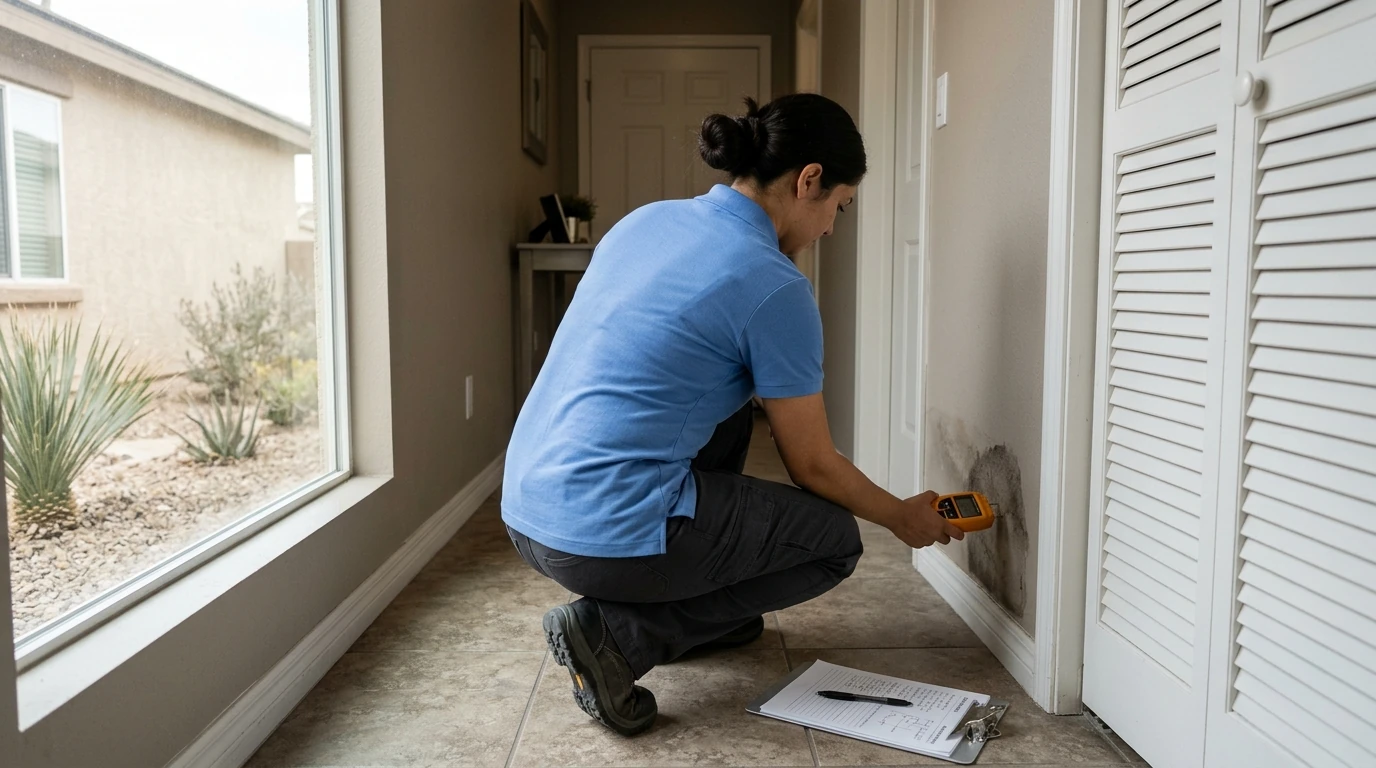
If the leak has already been fixed, or you’re not sure there’s an active leak at all, you can call a mold remediation company directly. A technician can trace whether there’s still moisture behind the wall or under the flooring with a meter, rather than guessing from a musty smell alone.
Don’t wait to figure out which one applies to you before making a call. Most restoration companies will tell you over the phone whether this sounds like a plumbing issue, an HVAC issue, or straight mold work, and point you the right direction even if that’s not them.
What actually causes mold in a North Las Vegas house?
Mold in this valley almost always follows a specific water event, not everyday humidity, because the desert climate keeps indoor air dry most of the year. The usual suspects: a slab leak under the flooring, a clogged or failed AC evaporator coil and condensate drain line, a water heater that’s failed or is slowly weeping, and roof leaks during monsoon season from July through September.
Most homes across the valley, including those near Nellis AFB and throughout North Las Vegas, sit on slab foundations, so a slab leak often means water traveling under tile or carpet for weeks before anyone notices a warped floor or a cool, damp spot. AC drain lines clog constantly during peak summer cooling season and back up into a ceiling or closet wall, which is one of the more common calls this time of year as systems finally get a break and homeowners start noticing stains they missed all summer. Mold can start growing on a wet material within 24 to 48 hours (EPA), which is why it’s usually already established by the time anyone smells it.
Because the water source is usually hidden, the mold is too. See our post on signs of hidden mold for what to look for behind walls, under flooring, and in attic spaces specifically.
Do you need a mold test, or can a company just start remediation?
Testing is useful when you need to document the extent of growth for an insurance claim or confirm that a musty smell is actually mold, but it isn’t required before a licensed remediator can start work on obvious, visible growth. If you can see it and it’s spreading, most companies will move straight to mold inspection and testing paired with a remediation scope, rather than running a lab test on something that’s already confirmed.
Testing becomes more useful when the smell is there but the growth isn’t visible, when you’re buying or selling a home, or when you need air-quality clearance after remediation to prove the space is safe again. Our guide on how to test for mold breaks down DIY kits versus a professional air sample.
What happens when you call Desert Valley Restoration?
A technician inspects the affected area with a moisture meter, traces where the water actually came from, and writes a scope of work before any containment or removal begins. That scope matters for two reasons: it tells you what’s actually being done, and it becomes the documentation an insurance adjuster will want to see.
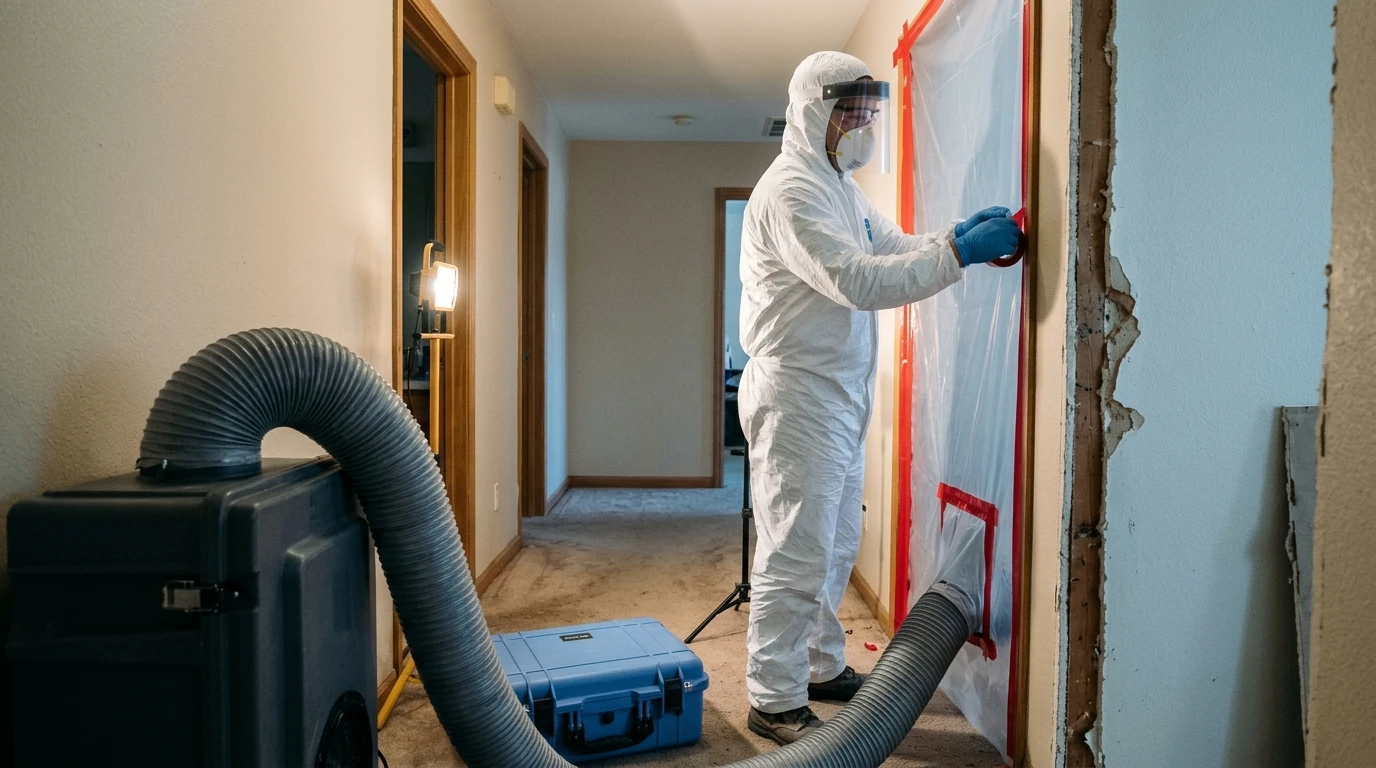
From there the work typically follows a set pattern: containment with poly sheeting to keep spores from spreading to the rest of the house, HEPA air scrubbers running negative air pressure, removal of affected porous material like drywall or subflooring that can’t be cleaned, and structural drying carried out to the IICRC S520 mold remediation standard. If the original source was a plumbing or appliance failure, the drying side of the job overlaps with water damage restoration, since you’re dealing with both the moisture and the mold it caused.
Homeowners insurance typically only covers mold cleanup when it follows a sudden, covered water loss, like a burst supply line, not a slow leak you lived with for months, and even then coverage is often capped. Check your policy’s mold provisions directly, and keep every receipt and photo from the start (Triple-I).
If you’re seeing active growth or a smell you can’t place, don’t wait on it to resolve itself. Schedule a mold inspection by calling (702) 633-5033.