24/7 Emergency Flood Damage Restoration in North Las Vegas
24/7 emergency flood damage restoration in North Las Vegas and surrounding areas. IICRC-certified, insurance billing accepted. Call (702) 633-5033.
Flood damage emergency in North Las Vegas? Call now, we answer 24/7. A monsoon cell that dumps an inch of rain in twenty minutes doesn’t care that most North Las Vegas homes sit on slab foundations with the HVAC and electrical panel at ground level. Wash overflow, sheet flow off Decatur and Craig, or a failed sump during a summer storm can push standing water through baseboards and into wall cavities within the hour. The difference between a flood that costs a few thousand dollars to fix and one that requires gutting drywall and cabinetry usually comes down to how fast extraction starts.
What flood damage restoration actually involves
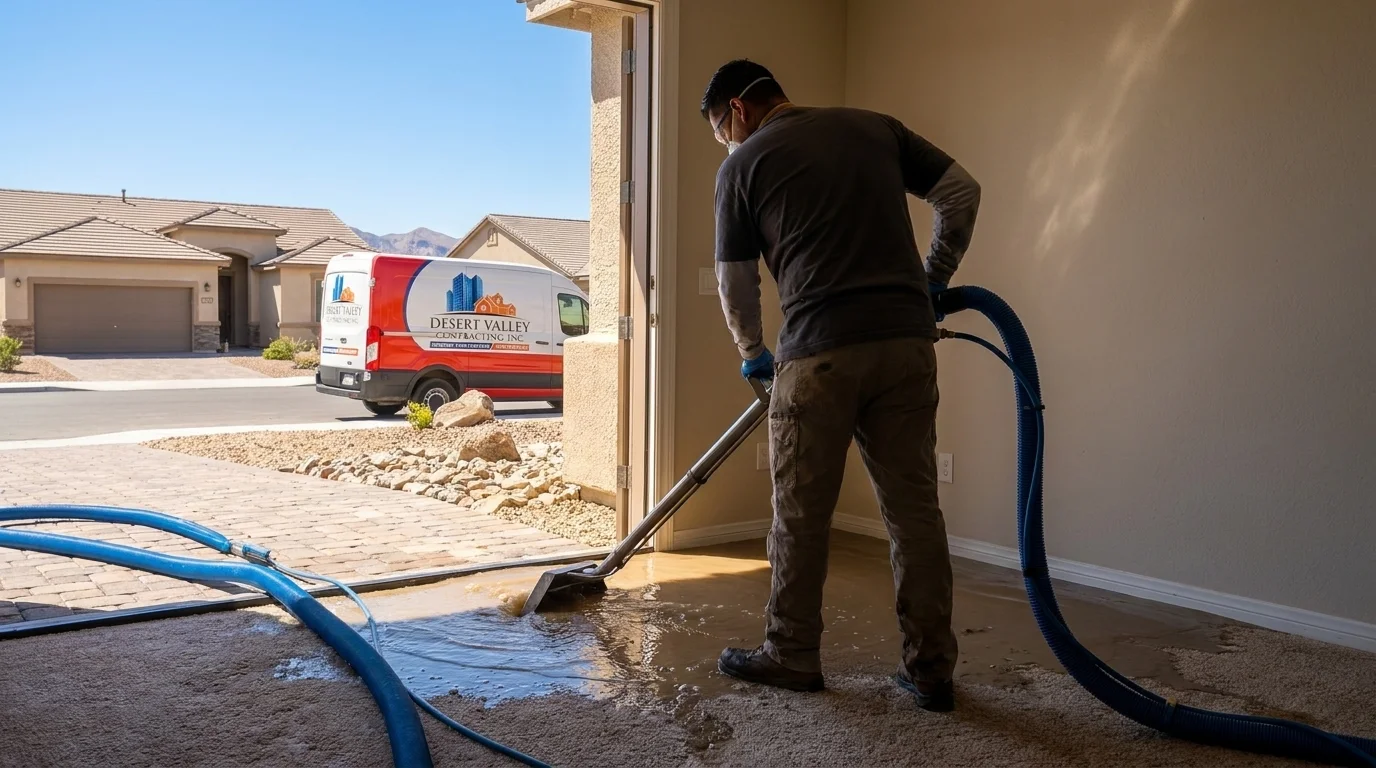
Flood damage restoration covers the extraction, drying, and sanitizing of a structure after water enters from an outside source, monsoon runoff, a breached retention basin, an overflowing wash, or municipal drainage backing up during a storm. Unlike a clean supply-line leak, floodwater is almost always Category 2 or 3, meaning it’s carried soil, debris, or contaminants from outside the home. That changes the scope: porous materials that touched floodwater (carpet pad, baseboard, drywall below the waterline) typically can’t be dried in place and have to come out. Crews use submersible pumps and truck-mount extractors for standing water, then move to low-grain refrigerant dehumidifiers and axial air movers once the bulk water is gone. On a typical single-story North Las Vegas home with a few inches of floodwater, extraction takes a few hours and structural drying runs several days, tracked daily with moisture meters against dry standard readings.
Our process
- Safety and source control. Before anyone steps inside, we confirm the electrical panel is safe to approach and identify whether water is still entering the structure.
- Category classification and extraction. We classify the water source, then pull standing water with pumps and truck-mounted extractors, prioritizing rooms where water is migrating into adjacent areas.
- Contaminated material removal. Flood water categorization usually means carpet, pad, and affected baseboard or drywall get removed rather than dried, following IICRC S500 guidance.
- Structural drying and monitoring. Dehumidifiers and air movers are set based on room size and material type, with moisture readings logged daily until materials hit dry standard.
- Cleaning and antimicrobial treatment. Affected surfaces are cleaned and treated to address contamination risk before reconstruction begins.
What separates a good flood response from a bad one
The most common mistake is treating a flood like a clean water leak: drying carpet and pad that should have been removed, or skipping behind baseboard and inside wall cavities where water wicks upward. Adjusters increasingly ask for daily moisture logs and photos documenting Category classification, so documentation gaps can slow a claim even when the drying itself was done correctly. Another frequent miss is under-sizing equipment for the square footage, which stretches a three-day dry-out into a two-week job and invites secondary mold growth. A thorough response also checks HVAC returns and ductwork near the flood zone, since these pull contaminated air through the system if not isolated early.
What does flood damage restoration cost?
Costs vary with how much water entered, how long it sat before extraction started, and how many materials were contaminated versus simply wet. Every loss is different, and Desert Valley Restoration provides a written scope of work before any restoration begins so there are no surprises. Homeowners insurance typically covers sudden flood damage from storm runoff or plumbing failure when it’s a named peril on the policy, though standalone flood insurance through the NFIP is often required for rising-water events; a claims adjuster will confirm what applies to your policy.
| Scenario | Typical range |
|---|---|
| Single room, shallow water, quick extraction | $1,500 - $4,000 |
| Multiple rooms, carpet and pad removal | $4,000 - $9,000 |
| Whole-floor flood with drywall and baseboard removal | $8,000 - $18,000 |
| Flood reaching electrical or HVAC components | $10,000 - $25,000+ |
| Contents cleaning and pack-out after flooding | $1,000 - $5,000 |
Seasonal & regional considerations
North Las Vegas sees its highest flood risk during monsoon season, roughly July through September, when short, intense storms overwhelm washes and street drainage faster than the desert soil can absorb it. Homes near natural washes or with grading that slopes toward the foundation are especially exposed. Outside monsoon season, flood calls more often trace back to irrigation line breaks or retention basin overflow after an unusually wet winter storm system.
Service area
Desert Valley Restoration responds to flood damage throughout North Las Vegas and surrounding communities including Las Vegas, Henderson, and the broader Las Vegas Valley.
Standing water doesn’t wait for business hours, and neither should extraction. Call (702) 633-5033 to schedule emergency flood water extraction and get a written drying plan started today.
Services We Handle
- 24/7 Emergency Flood Damage
- 24/7 Flood Restoration
- Emergency Flood Cleanup
Frequently Asked Questions
Does homeowners insurance cover flood damage restoration?
Why can't flooded carpet usually just be dried instead of replaced?
How long does structural drying take after a flood?
What should I do with my belongings while flood cleanup is happening?
Does flood water get into the HVAC system, and does that need separate treatment?
Looking for the best flood damage restoration company in North Las Vegas?
Desert Valley Restoration provides licensed and insured flood damage restoration in North Las Vegas, NV and the surrounding area, and has served local property owners since 2000. Customers rate us 4.3 out of 5 stars across 95 Google reviews. We answer calls 24/7 — call (702) 633-5033 for immediate help.
Need Flood Damage Restoration now?
We respond 24/7 across North Las Vegas and surrounding NV cities.
Related Coverage
- Our Restoration Services
- Contact Desert Valley Restoration
- Restoration Services in Blue Diamond
- Restoration Services in Boulder City
- Restoration Services in Enterprise
- Restoration Services in Henderson
- Restoration Services in Indian Springs
- Restoration Services in Las Vegas
- Restoration Services in Moapa Town
- Restoration Services in Moapa Valley
- Restoration Services in Mount Charleston
- Restoration Services in Nelson
- Restoration Services in Pahrump
- Restoration Services in Paradise