24/7 Emergency Fire Damage Restoration in Mount Charleston
24/7 emergency fire damage restoration in Mount Charleston, NV. IICRC-certified, insurance billing accepted. Call (702) 633-5033.
Our IICRC-certified technicians are dispatched from our North Las Vegas, NV headquarters and are typically on-site in Mount Charleston within 60 minutes of your call.
Fire damage emergency in Mount Charleston? We answer 24/7, and if you’re standing outside a scorched cabin at 7,500 feet wondering what’s salvageable, the clock matters more than it would at sea level. Mount Charleston’s mountain building stock, heavy timber framing, tongue-and-groove pine paneling, propane and wood-stove heating, behaves differently under fire and smoke than a standard Las Vegas valley home, and the restoration approach has to account for that from the first walkthrough.
Why Mount Charleston Properties See Fire Damage Issues
Mount Charleston sits inside the Spring Mountains’ pine and fir forest, which means wildfire exposure and interior ignition sources both run higher than in the valley below. Many cabins and seasonal homes still rely on wood stoves or propane heaters to get through winters at elevation, and chimney fires, creosote buildup, and space-heater incidents are a recurring cause of calls up here. Add low humidity and dry pine needle debris around structures during fire season, and a small kitchen or heating fire can spread into attic and exterior framing faster than it would in a stucco-and-drywall valley house. The wood-heavy interiors that make these cabins charming also absorb and hold smoke odor deep into the grain, which changes how long deodorization takes.
Our Fire Damage Restoration Process in Mount Charleston
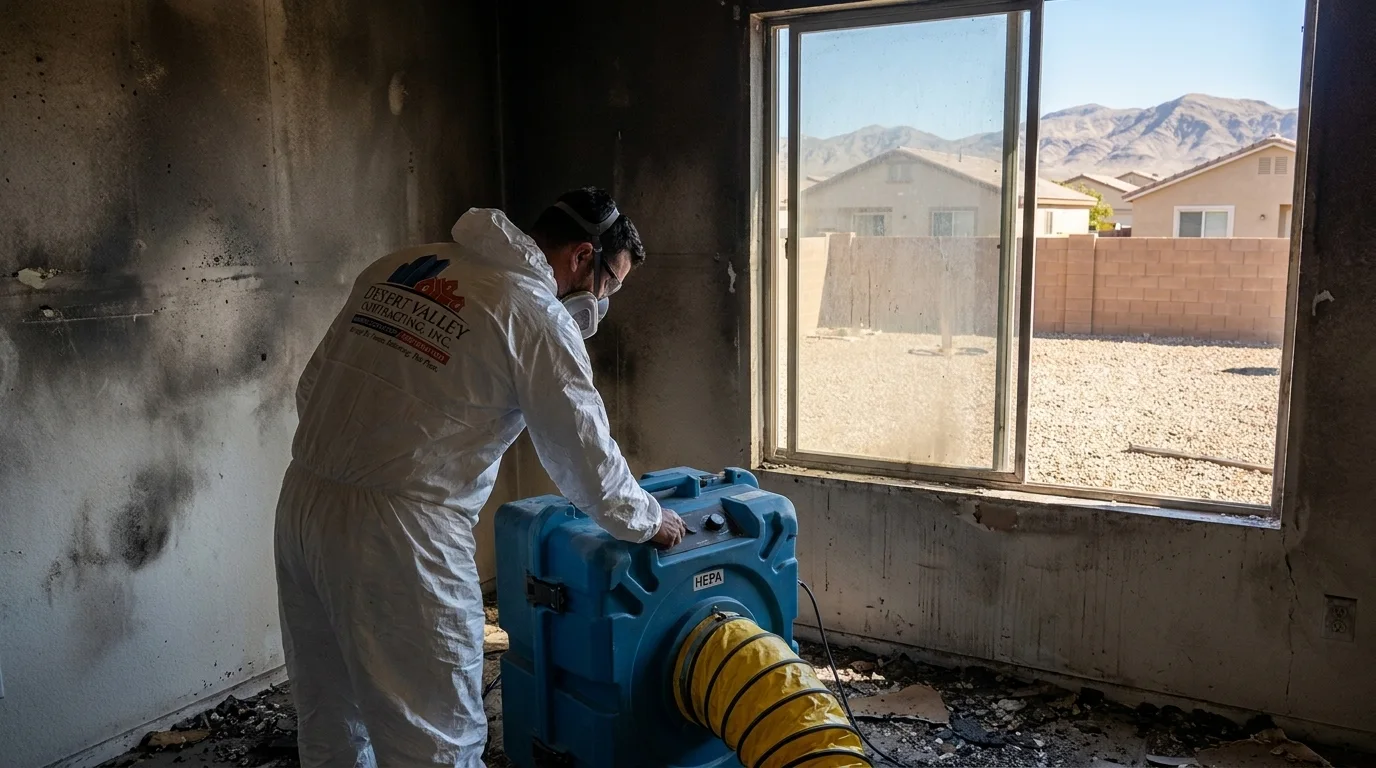
We start with a structural and air-quality assessment before anything gets touched, since soot settling on open-grain pine or cedar paneling behaves differently than soot on painted drywall. Our crews, trained to IICRC FSRT fire and smoke standards, separate dry-chemical cleaning from wet cleaning methods depending on the wood finish, because the wrong solvent on an unsealed log wall can push soot deeper into the grain instead of lifting it out. Structural drying follows IICRC ASD protocols where firefighting water has soaked framing or subfloor, which is common in these mountain cabins given how much water it takes to knock down a fire in dense timber construction. Content cleaning, ozone or hydroxyl treatment for odor, and air scrubbing round out the job before we sign off on reconstruction.
Reaching Mount Charleston from North Las Vegas
Our crews come up from North Las Vegas via Kyle Canyon Road, and we plan around the realities of mountain access: narrow switchbacks, limited shoulder space for staging trailers and equipment trucks, and winter conditions that can close the route entirely after a heavy snowfall. On fire calls we coordinate directly with homeowners and, where applicable, the local fire station on scene, since structural fire sites often need sign-off before we can begin extraction or board-up work. We don’t promise a specific arrival window up the canyon the way we might for a flatland address, but we do call ahead to confirm road conditions and stage the right equipment before the crew leaves our yard.
Local note
One thing that catches homeowners off guard: dry mountain air at elevation actually slows down soot residue migration compared to the humid interiors we see in the valley, but it also means smoke odor clings longer to exposed wood because there’s less ambient moisture to help break it down naturally. On an unsealed log or tongue-and-groove interior, we often need a second deodorization pass after the structure has had a few days to off-gas, rather than calling it finished on day one. Cabins that sit vacant for stretches between visits also tend to have smoke odor settle into insulation and crawlspace framing unnoticed, so we check those areas even when the visible damage looks contained to one room.
Fire damage in a Mount Charleston cabin isn’t the same job as fire damage in a North Las Vegas tract home, and treating it that way is how odor and hidden soot get left behind. Desert Valley Restoration is licensed (#0072652-B & B6) and carries IICRC certification in fire, smoke, and structural drying, and we’re available around the clock to get a crew moving up the canyon when you need one.
Serving Mount Charleston from our North Las Vegas headquarters — ★ 4.4 · 96 Google reviews
“Juan and his crew were exceptional in everything they did. Very professional, knowledgeable and hard working. Juan always answered all my questions in a very friendly and helpful manner.” — M, July 2026Read our reviews on Google →
Fire Damage Restoration in Mount Charleston: Service Coverage
Frequently Asked Questions
How fast can you arrive for fire damage restoration in Mount Charleston?
How does Mount Charleston's elevation affect fire damage cleanup compared to a Las Vegas valley home?
Can you reach a cabin in Mount Charleston if Kyle Canyon Road is affected by snow?
Do wood stoves and propane heaters make Mount Charleston homes more prone to structural fire damage?
How do you remove smoke odor from log or tongue-and-groove paneled walls?
Does homeowners insurance treat fire claims differently for seasonal or vacant Mount Charleston cabins?
Fire Damage Restoration response in Mount Charleston
Most Mount Charleston calls see a technician on-site within 60 minutes from our North Las Vegas headquarters.