
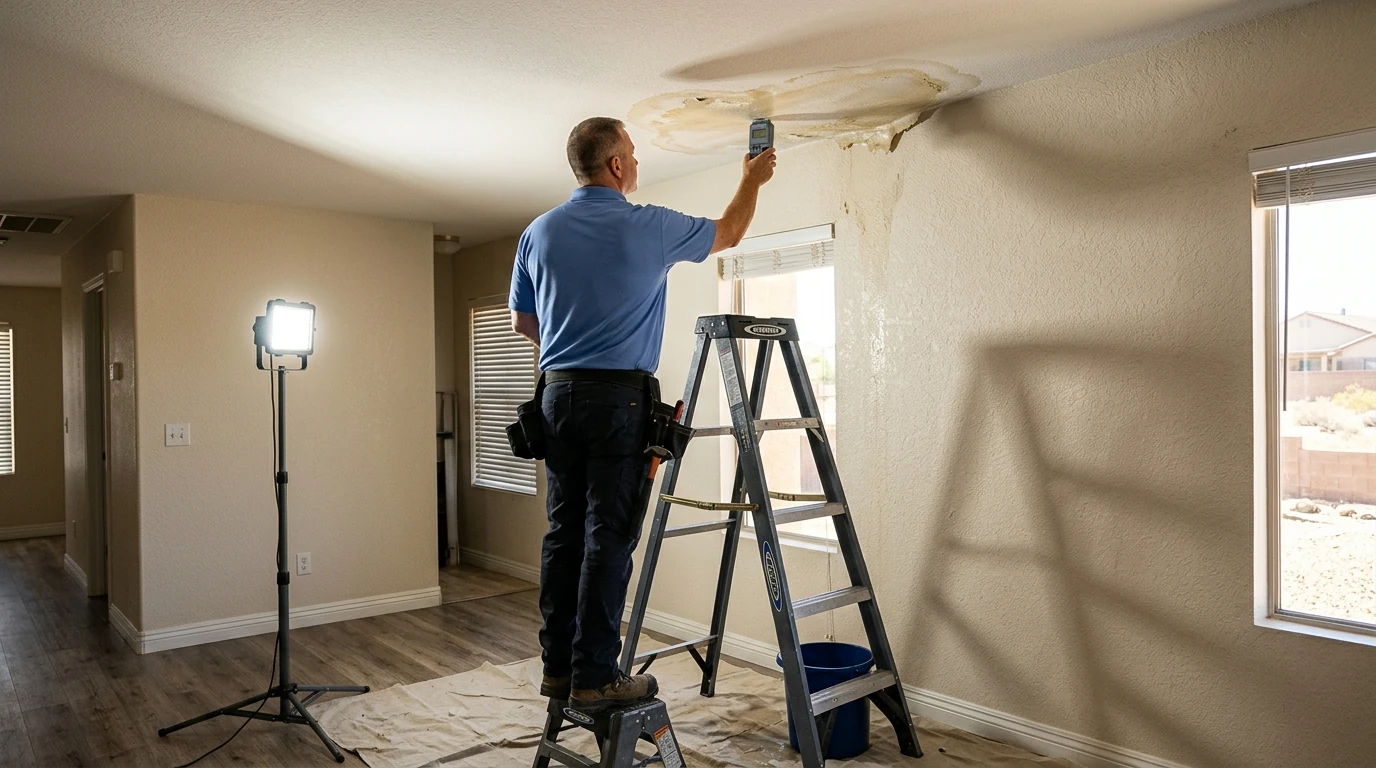
If AC condensate is dripping through your ceiling right now, turn the air conditioner off at the thermostat, set a bucket under the drip, and call an HVAC technician to clear the clogged drain line, that is the cause in most North Las Vegas homes. Once the leak is stopped, call Desert Valley Restoration at (702) 633-5033 to dry out the wet ceiling, attic insulation, and framing before mold gets a foothold. They run a 24/7 line and hold IICRC certification for structural drying, so the water damage side of this gets handled the same day the leak stops.
Why Is Water Coming Through the Ceiling Instead of Just Dripping From a Vent?
A ceiling stain or active drip under an attic air handler almost always means the condensate drain line is clogged or the secondary overflow pan has rusted through. Every central AC system pulls moisture out of the air and routes it through a small PVC drain line to the outside. In a North Las Vegas summer, with the air handler running nearly nonstop, that line fills faster with the algae, dust, and mineral buildup that eventually block it.
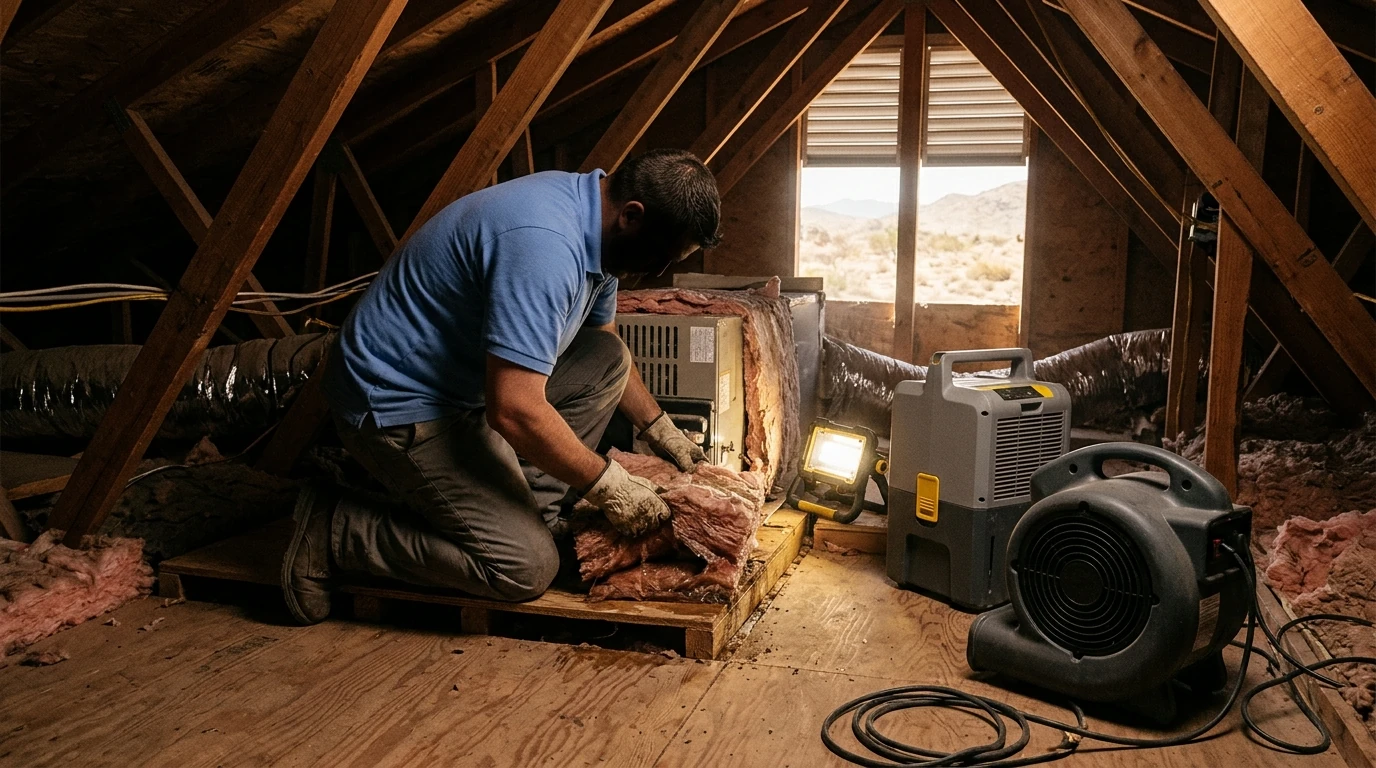
Once the primary drain backs up, the water has to go somewhere. Systems with a secondary overflow pan are supposed to catch that backup and route it to a second drain or trigger a float switch that shuts the unit down. When the pan has rusted through, cracked, or sits slightly out of level, the water misses the pan entirely and soaks straight into the attic insulation and the drywall below it.
Who Do You Call First, an HVAC Tech or a Restoration Company?
Call an HVAC technician first for the leak itself, and a restoration company for everything the water has already touched. The two jobs don’t overlap: an HVAC tech clears the line or replaces the pan so the system stops leaking, while a restoration crew handles the water damage restoration side, pulling back wet insulation, drying the structure, and checking for mold. Desert Valley Restoration does not service HVAC equipment itself, so the drain line or pan repair needs a licensed HVAC contractor; call for the water side once that part is handled.
The only time this becomes a 911 or utility call is if water is pooling near an electrical fixture, outlet, or panel. Cut power to that circuit at the breaker before you do anything else, and treat an active electrical hazard as the priority over the water itself.
What Should You Do in the First 10 Minutes?
The first 10 minutes decide whether this stays a simple ceiling repair or turns into a bigger renovation. Shut the AC off at the thermostat right away; this stops the system from pulling in more humid air and pushing it across insulation that’s already wet. Set a bucket or towels under the active drip and move furniture or electronics out from directly underneath.
If the ceiling is bulging or soft from trapped water, don’t wait for it to let go on its own. Push a screwdriver or the corner of a putty knife into the lowest point of the bulge, over a bucket, to release the water in a controlled way before the drywall collapses under its own weight. Stay clear of any light fixture or ceiling fan near the wet spot. Photograph the stain, the drip, and any bulging before you touch it; those photos matter later for an insurance claim.
What Happens When the Restoration Crew Gets There?
A restoration technician maps the wet area with a moisture meter, pulls back the saturated insulation and drywall that won’t dry in place, and sets dehumidifiers and air movers to bring the structure back to a dry standard, following the ANSI/IICRC S500 standard for water damage drying. In a North Las Vegas attic, where summer temperatures regularly top 130 degrees, trapped moisture in insulation can stay warm and humid for days if it isn’t pulled and dried correctly, and mold can start growing within 24 to 48 hours on wet building material. That’s why drying the attic side of the leak matters as much as drying the ceiling drywall you can actually see.
If the ceiling drywall is stained, sagging, or was already opened up to release water, it usually needs cutting back to sound material and rebuilding rather than a paint touch-up. That part of the job is ceiling water damage repair, and sometimes a larger reconstruction scope if framing or more than one room was affected. If the moisture sat long enough for a musty smell or visible spotting to show up, mold inspection and remediation should happen before the ceiling gets closed back up.
Will Homeowners Insurance Cover an AC Condensate Leak?
Most homeowners policies treat a sudden mechanical failure, like a cracked overflow pan or a drain line that backed up unexpectedly, the same way they treat other sudden water damage from a home system: typically covered, minus your deductible. What usually isn’t covered is years of a known, slow drip that was never fixed; insurers tend to treat that as a maintenance issue rather than a sudden loss. Photograph the damage, keep the HVAC tech’s invoice showing what failed and when, and get a written drying scope from whoever handles the water side. For more on how that claim process usually works, see this guide to homeowners insurance and water damage.
A ceiling leak from an AC system is almost always two separate repairs: fixing the drain line or pan, and drying out everything the water touched before mold or soft drywall becomes the bigger problem. Get the HVAC side cleared first, then request a moisture assessment at (702) 633-5033 the same day so drying starts while the damage is still fresh and easier to dry in place.