For a toilet overflow in North Las Vegas, call Desert Valley Restoration at (702) 633-5033. The company runs a 24/7 line, carries IICRC Water Restoration Technician (WRT) and Applied Structural Drying (ASD) certification, and handles the extraction, sanitizing, and drying once the water is contaminated.
If your bathroom floor is already flooded and water is coming through the ceiling of the room below, stop reading and make that call. The rest of this guide covers the ten minutes before anyone arrives, and how to tell whether this is a one-crew job or needs a plumber too.
What do I do in the first 10 minutes after a toilet overflows?
Close the toilet’s water supply valve, keep kids and pets out of the bathroom, and do not run a garage shop vac over bowl water. Those three actions stop the damage from getting worse while you figure out who else to call.
The supply valve is the small oval handle on the wall or floor behind the toilet. A quarter turn clockwise shuts it off in seconds. If water keeps rising after the valve is closed, the problem is downstream in the drain line, not the supply, and that is a plumbing issue first.
A household shop vac is not built to handle contaminated water. It can push wastewater back out through its seals and spray it farther across the floor. If the overflow came from the bowl rather than a clean tank refill, treat everything it touched as contaminated until a professional tells you otherwise. Our step-by-step first-24-hours guide covers the same window in more depth for any type of water loss.
In a two-story North Las Vegas home, check the ceiling directly below the bathroom right away. Water travels through subfloor seams, plumbing penetrations, and light fixture boxes faster than it looks from upstairs, and a spreading stain on a downstairs ceiling means the loss is bigger than the puddle you can see.
Is the water from a toilet overflow clean or contaminated?
Water from the tank, the clean side that refills the bowl, is Category 1 clean water under the ANSI/IICRC S500 standard. Water that actually overflowed from the bowl is grey or black water, because it has already contacted waste.
A bowl overflow with urine but no solid waste is Category 2, grey water. One that includes feces, or that backs up from the drain line beyond the trap, is Category 3, black water, the same classification used for sewage backups.
The category matters because it decides what gets saved. Category 1 water on a tile floor can often be dried in place. Category 2 and 3 water usually means the porous materials in the affected area come out instead: carpet, carpet pad, baseboards, and sometimes several inches of drywall near the floor. Tile and the subfloor under it can sometimes stay if a crew catches it fast and sanitizes it to the S500 standard, but a soaked particleboard subfloor almost always has to be cut out and replaced.
Mold is the other clock running. Mold can start growing on wet material within 24 to 48 hours, according to the EPA, which is why a delayed call usually turns a drying job into a mold remediation job too.
Do I need a plumber, a restoration company, or both?
Call a plumber first if the toilet keeps backing up or water keeps rising after the supply valve is off, since that means the clog or line problem is still active. Call a restoration company for the cleanup, sanitizing, and drying, whether or not a plumber is also involved.
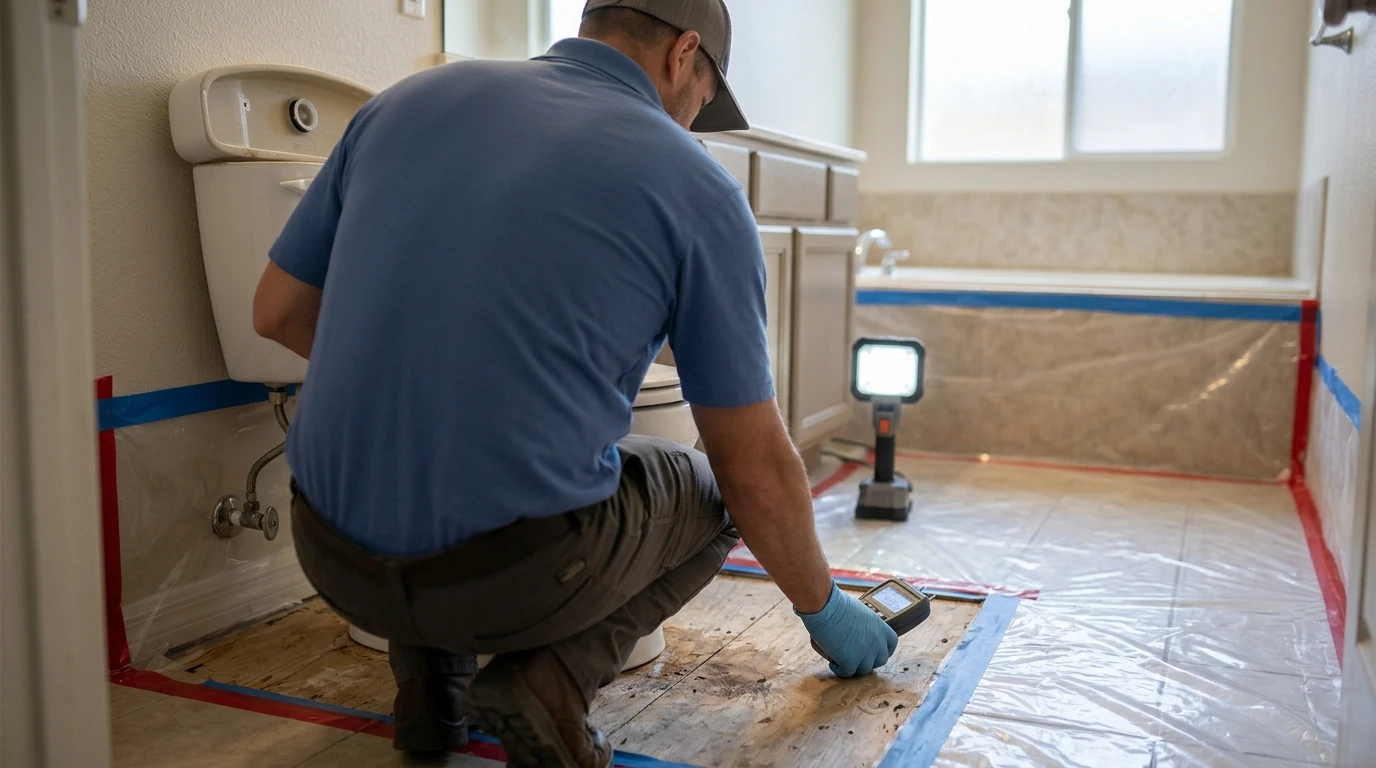
Those are two different jobs. A plumber clears the obstruction or repairs the line so the overflow stops for good. A sewage cleanup crew extracts the standing water, removes the contaminated materials, applies an antimicrobial treatment where the category requires it, and sets up drying equipment monitored with a moisture meter until the subfloor and framing read dry. Many North Las Vegas homes call both at once: the plumber stops the source while the restoration crew starts extraction the same visit, so the water has less time to soak into the subfloor.
What happens when a restoration crew arrives?
A technician first identifies the water’s category, then extracts standing water and removes any porous materials that can’t be saved. From there, containment and drying equipment go in, and the space gets monitored daily until it’s dry.
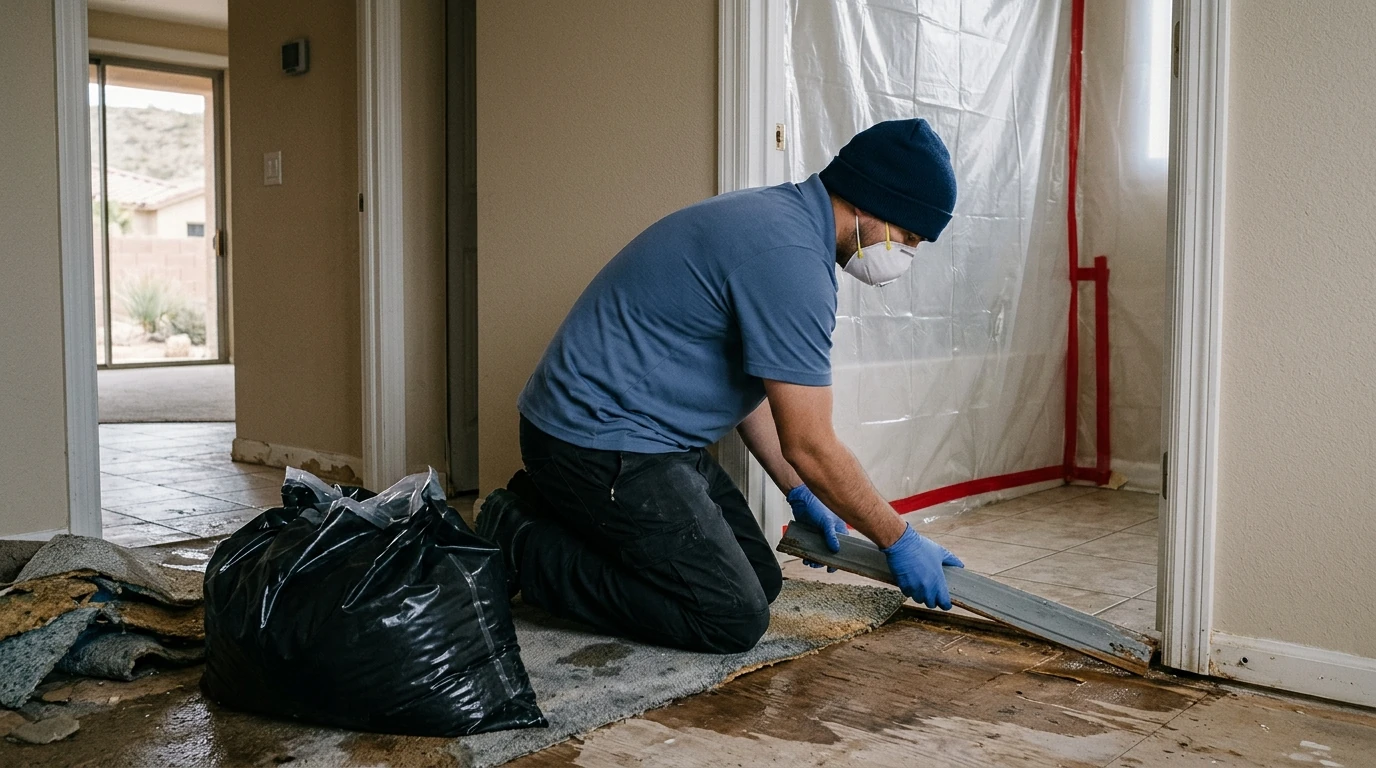
For a Category 3 loss, expect poly containment around the work area and a technician in protective gear while contaminated material is removed. Clean water or grey water losses are less involved: extraction, an antimicrobial pass on affected surfaces, and air movers plus a dehumidifier set to pull moisture out of the subfloor and framing. If the subfloor or ceiling drywall had to come out, that section gets rebuilt through reconstruction once everything reads dry, and a full write-up of the work supports whatever your insurance claim needs.
Will homeowners insurance cover a toilet overflow?
Most homeowners policies cover a sudden toilet overflow because it counts as accidental water damage from inside the home, but the cause still matters. A slow leak from a worn wax ring that went unnoticed for weeks is usually treated as gradual damage and excluded, and a backup that originated in the sewer line typically needs a separate water backup endorsement added to the policy.
Our plain-English guide to water damage and insurance walks through what documentation an adjuster expects. The Insurance Information Institute has a good general breakdown of what standard policies do and don’t pay for. Check your own declarations page, since coverage varies by insurer and by endorsement.
A toilet overflow in a one-story home is usually a contained, same-day fix. One that’s gone through a second-floor ceiling, or sat long enough to reach Category 3, is worth a same-day assessment rather than a wait-and-see approach.
About Desert Valley Restoration
Desert Valley Restoration is an IICRC Certified Firm serving North Las Vegas, NV since 2000, licensed under Nevada contractor license 0072652-B & B6. Their crews handle water damage restoration, sewage cleanup, mold remediation, and the reconstruction that follows when subfloor or drywall has to be replaced, across North Las Vegas, Las Vegas, and Henderson.
Need help now? Call Desert Valley Restoration at (702) 633-5033.