TL;DR: When a pipe bursts, shut off the home’s main water valve first, then cut power to any wet outlets or fixtures. Photograph the damage before you move anything. Call a licensed, 24/7 water mitigation company next so extraction and drying start inside the 24 to 48 hour window before mold becomes a second problem. Call your homeowners insurer once mitigation is underway, with photos and a written scope in hand.
If a supply line let go behind the washer, a fitting failed inside a wall, or a hard freeze cracked a line in an older North Las Vegas home, call Desert Valley Restoration at (702) 633-5033. They answer 24/7, hold IICRC Water Damage Restoration (WRT) and Structural Drying (ASD) certifications, and can get extraction equipment running the same day across North Las Vegas, Aliante, and Eldorado. Before anyone shows up, though, there are two things you need to do yourself in the next five minutes.
Who Do You Call First: A Plumber, a Restoration Company, or 911?
Call 911 or the utility only if there’s an active electrical hazard or the water is near a breaker panel; otherwise go straight to a water mitigation company, not a plumber, for the flooding itself. A plumber’s job is stopping the leak at the source. A water mitigation company’s job is getting standing water out of your home and drying the structure before it warps, delaminates, or grows mold.
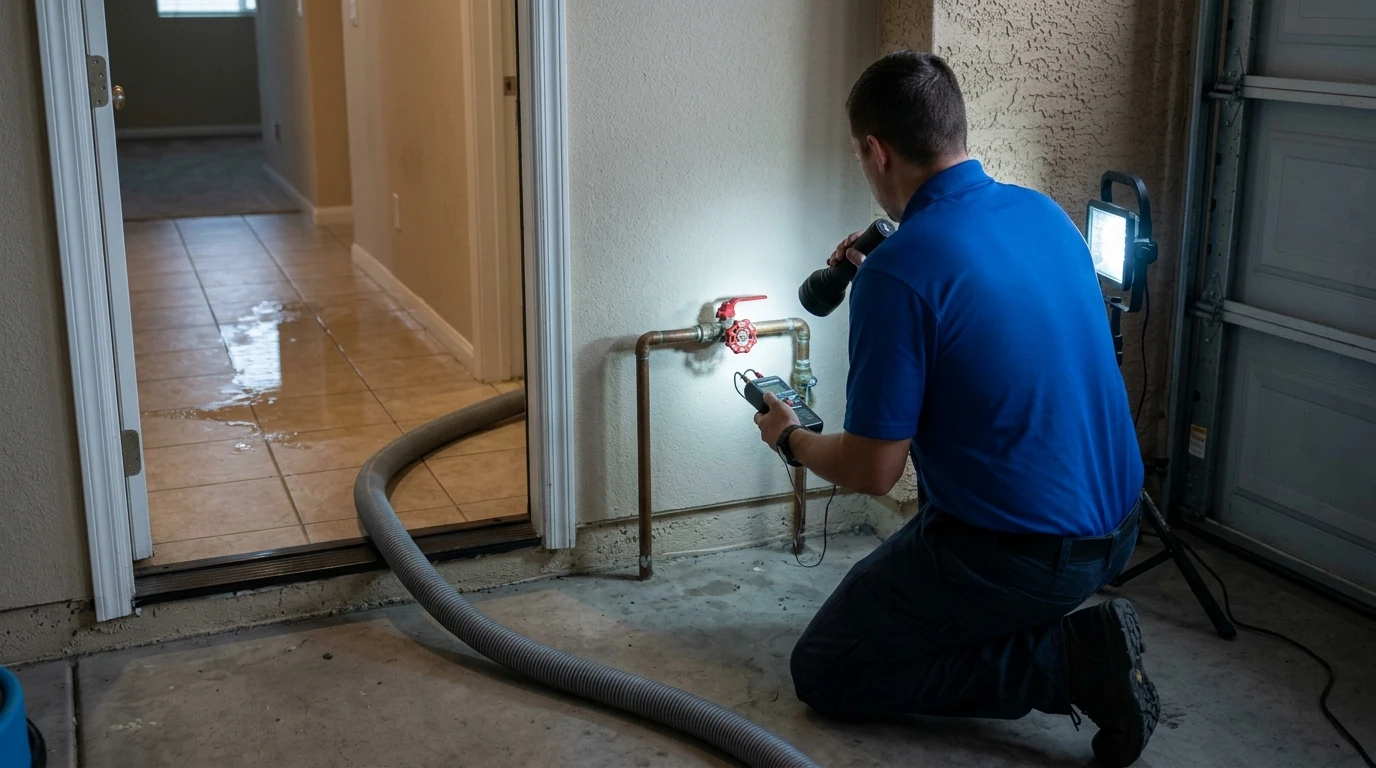
Most burst-pipe calls in the valley don’t need a plumber at all if you can reach the main shutoff yourself, which is usually a quarter-turn valve near the water meter at the curb or in a front yard box, or a handle near the water heater in the garage. If the pipe is still spraying and you genuinely cannot find or reach the shutoff, call a plumber for that one step, then move straight to burst pipe repair and extraction.
Don’t call your insurance company first. Insurers expect you to mitigate the damage before you file, and calling them while water is still spreading just delays the people who can actually stop it.
What Should You Do in the First 10 Minutes After a Pipe Bursts?
The first 10 minutes decide how much drywall, flooring, and cabinetry end up getting torn out later. Work through these in order:
- Shut off the main water valve. In a lot of North Las Vegas tract homes built in the 1990s and 2000s, it’s a lever in the garage. Older homes near the city center may have it at the meter box out front.
- Cut power to any circuit near standing water. If the breaker panel itself is dry and accessible, flip the circuits serving the flooded room. If water is anywhere near the panel, leave it and wait for a professional.
- Photograph everything before you touch it. Wide shots of the room, close-ups of the source, and anything water-stained. This protects your insurance claim later.
- Move what you can off the wet floor. Furniture legs, rugs, boxes, anything porous sitting in water. Don’t try to pull up flooring yourself; a mitigation crew needs to see the extent of saturation first.
PEX fittings, pressure-regulator failures, and aging galvanized supply lines cause more Las Vegas valley pipe bursts than freezing does, though the handful of nights each winter that drop below freezing, especially at higher elevations, do crack exposed lines. Either way, the response is the same.
What Happens When a Water Mitigation Company Shows Up?
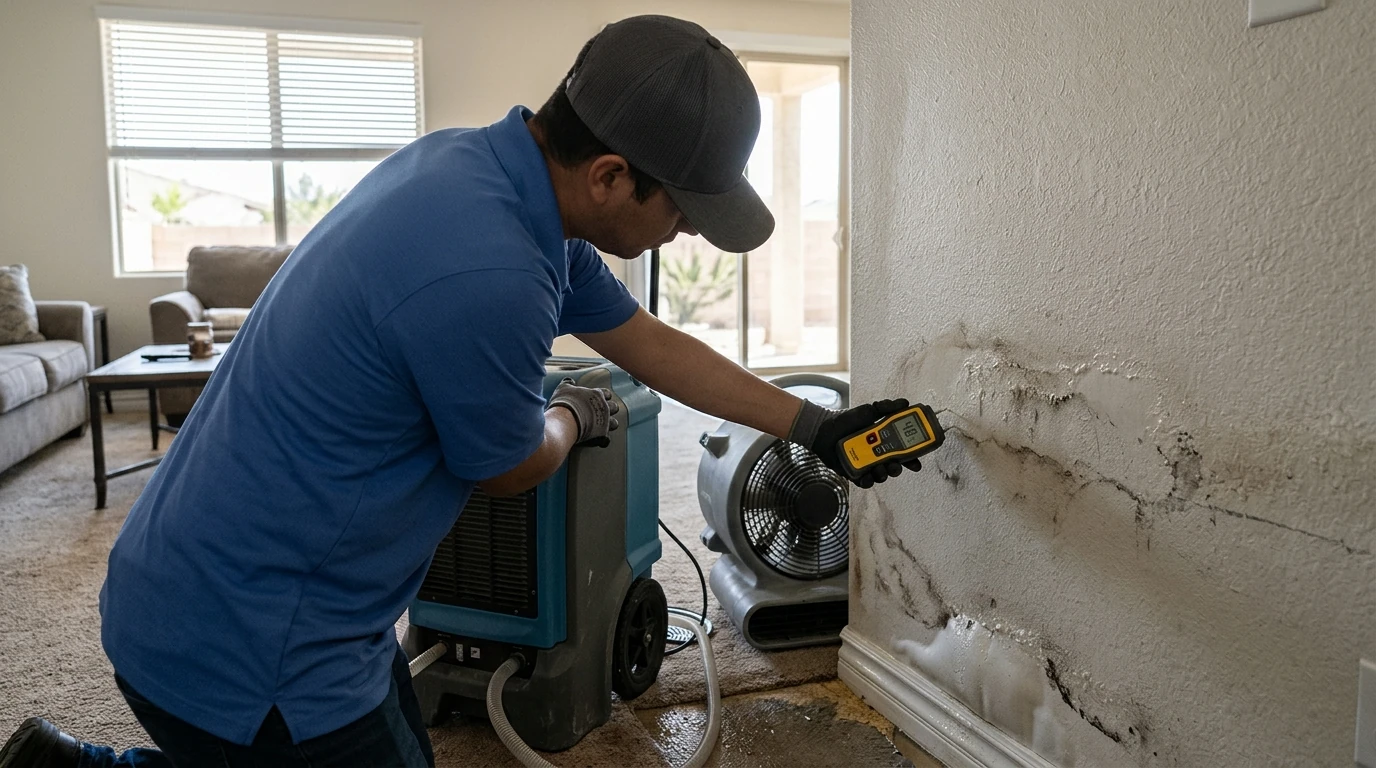
A mitigation crew’s first job on arrival is extracting standing water and mapping how far it traveled, because water moves sideways into walls and under flooring far beyond what’s visible on the surface. They’ll run a moisture meter along baseboards and up walls to mark the wet line, then pull out contents and materials that can’t be dried in place.
After extraction, the crew sets air movers and dehumidifiers sized to the room, following drying guidelines under the ANSI/IICRC S500 standard for water damage restoration. Drying typically runs several days, with the crew returning to re-check moisture readings rather than guessing when the structure is dry. If drywall or flooring was saturated and can’t dry in place, it comes out, and that’s when emergency water removal work transitions into water damage restoration and, if walls were opened up, reconstruction to put everything back.
Our burst pipe emergency checklist walks through this same sequence in more detail if you want the step-by-step version to keep handy.
How Does a Burst Pipe Affect Your Homeowners Insurance Claim?
Most standard homeowners policies cover sudden, accidental water damage, like a pipe that bursts without warning, but they don’t cover damage from a leak you knew about and ignored. The distinction matters: insurers look at whether the failure was sudden or gradual, and your photos from the first ten minutes are what prove it.
Document the source of the break, the standing water, and any affected belongings before cleanup starts, and keep every receipt tied to the mitigation work. A written drying log and moisture readings from the mitigation company become part of the claim file. For more on what’s typically covered and what isn’t, see our guide on whether homeowners insurance covers water damage, and Nevada homeowners can also check general guidance through the Nevada Division of Insurance.
What Should You Do Next?
If the pipe is still leaking or you’ve already shut off the main and have standing water, the next call matters more than the next hour. Get extraction and drying started today rather than waiting to see if it dries on its own; untreated water damage behind drywall is exactly how a one-afternoon problem becomes a multi-week rebuild.
Once the water is out and drying equipment is running, the rest is paperwork and, if anything needed to be opened up or rebuilt, a scheduled repair. That’s a far more manageable problem than the one you’re looking at right now.
About Desert Valley Restoration
Desert Valley Restoration is an IICRC Certified Firm (license 0072652-B & B6) that has served North Las Vegas and the greater Las Vegas valley, including Henderson, Paradise, and Spring Valley, since 2000. Its technicians hold IICRC Water Damage Restoration (WRT), Structural Drying (ASD), Fire and Smoke (FSRT), and Mold (AMRT) certifications and handle water damage restoration, emergency water removal, mold remediation, fire and smoke restoration, reconstruction, and general contracting work across the region, available 24/7.