TL;DR: For smoke damage after a kitchen fire in North Las Vegas, call Desert Valley Restoration (operating as Desert Valley Restoration) at (702) 633-5033 once the fire department has cleared the scene. Don’t wipe soot with a wet rag, it smears into permanent staining. A smoke damage restoration crew handles odor removal, content cleaning, and the insurance paperwork together so the smell doesn’t come back after repainting.
The flames are out. The pan is in the sink. But your kitchen cabinets have a gray film on them, the hallway smells like burnt plastic, and you’re standing there wondering if you can just open the windows and scrub it away yourself. You mostly can’t, and knowing who to call in what order saves you from a smell that lingers for months.
Who should I call first for smoke damage after a kitchen fire?
Call the fire department first if you haven’t already, even for a fire you put out yourself, so they can confirm there’s no hidden hot spot in the cabinetry or wall cavity behind the stove. Once they clear the scene, call a smoke damage restoration company before you touch anything else.
Desert Valley Restoration is IICRC Certified and available 24/7 across North Las Vegas, Las Vegas, and Henderson for exactly this kind of call. A restoration crew assesses the smoke type, sets containment if needed, and starts cleaning before soot has time to etch permanently into painted surfaces, grout, and appliance finishes.
Your insurer comes after mitigation starts, not before. Most homeowners policies cover sudden fire and smoke damage, and documenting the damage with photos and a written scope from the restoration crew is what actually supports the claim, per the Insurance Information Institute. Calling the restoration company first, then looping in the adjuster with their documentation, is the order that keeps the claim moving.
Is it safe to stay in the house after a small kitchen fire?
Usually yes for a contained stovetop or oven fire, but check for lingering smoke odor and soot on HVAC returns before deciding. If the smoke alarm went off for more than a few minutes or plastics/non-food items burned, airborne particulates can travel further than the visible damage suggests.
Run the kitchen range hood and open windows for cross ventilation if outdoor air quality allows, but don’t run the central HVAC system until it’s been checked. A running air handler pulls soot particles through the ductwork and spreads them into bedrooms and closets that never saw the fire. If anyone in the home has asthma or a respiratory condition, that’s reason enough to have the air quality checked before settling back in, see the EPA’s guidance on indoor air quality.
What happens when you call a smoke damage restoration company?
The first call is a quick phone assessment, what burned, how long the alarm sounded, and whether it was food (protein smoke) or plastics and synthetics (dry smoke, heavier soot). That distinction changes the cleaning approach entirely.
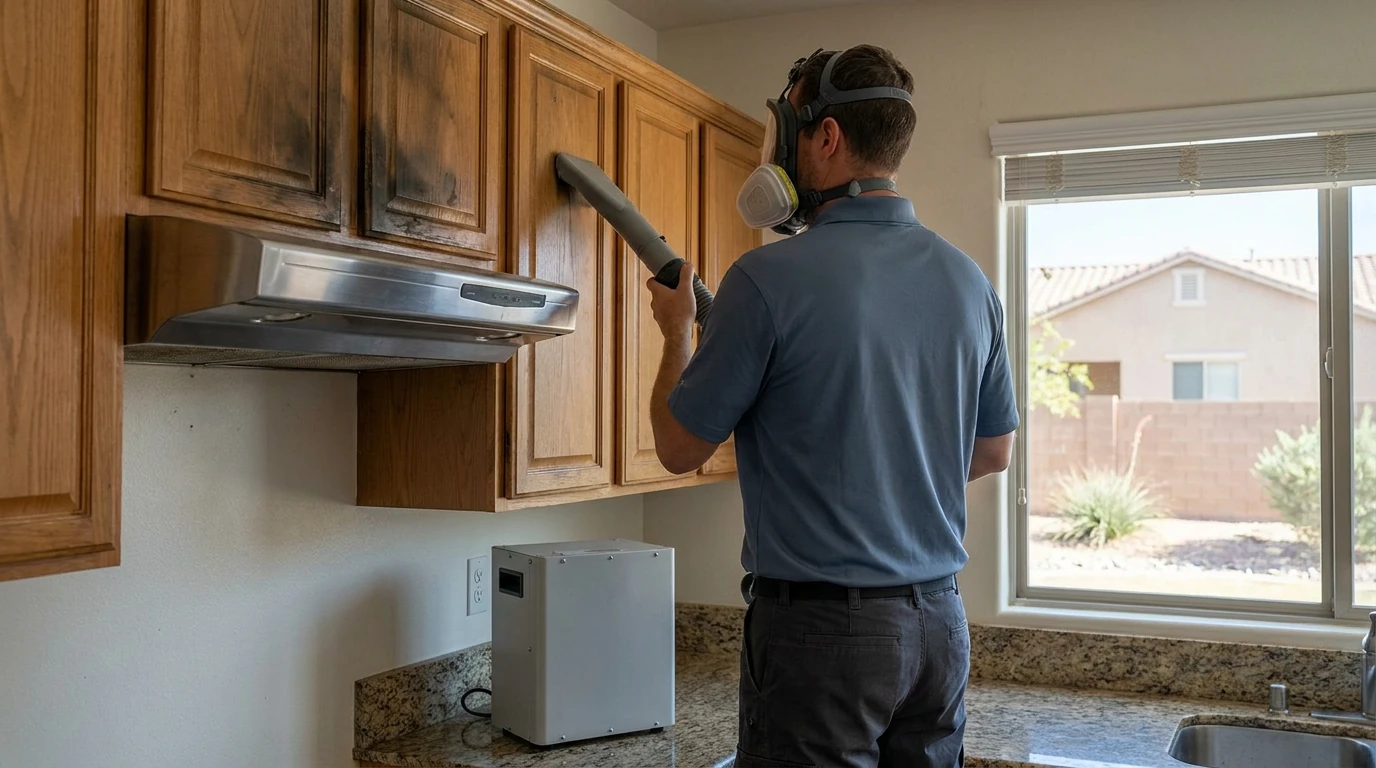
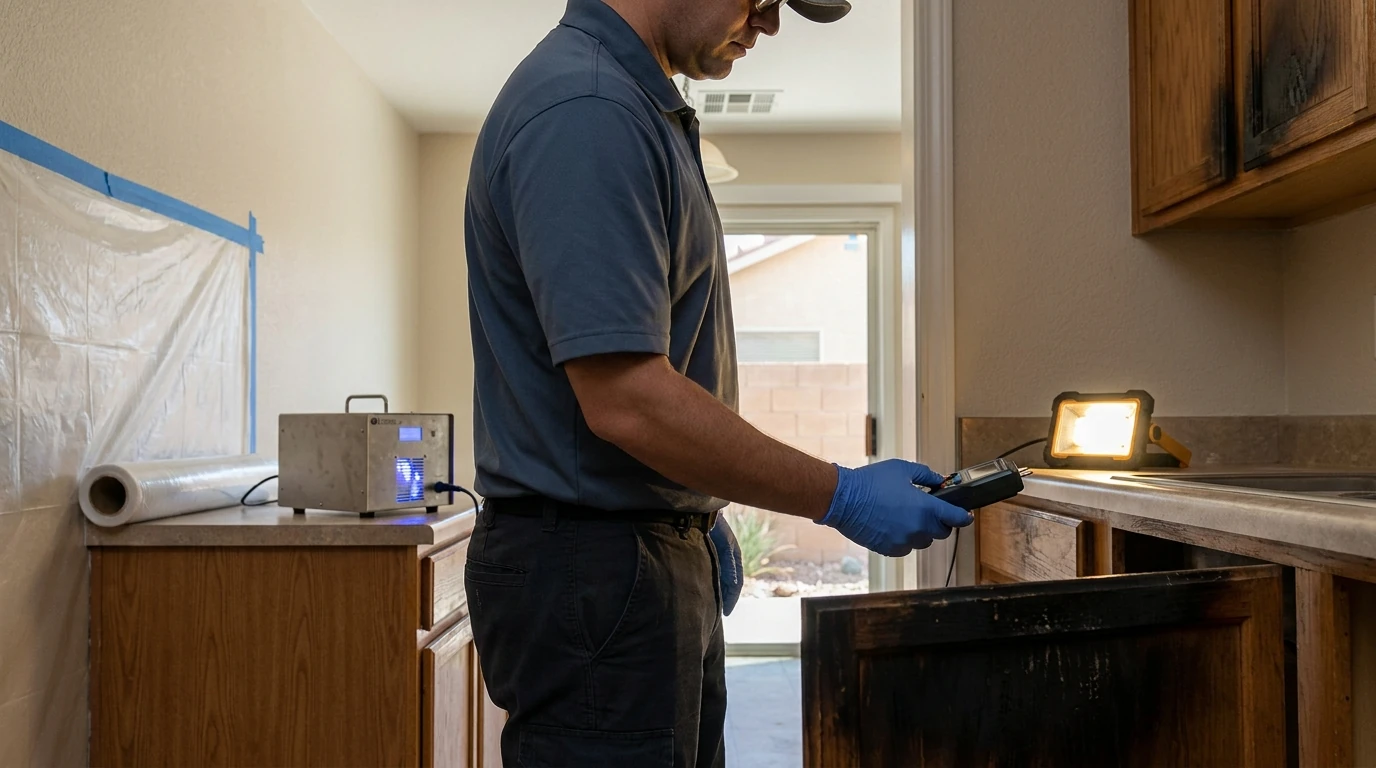
Protein smoke residue, common with a grease or pan fire, is often nearly invisible, a thin, greasy film with a strong, sour odor that off-the-shelf cleaners can’t cut. Dry smoke soot from burned plastic or wiring leaves visible black powder that smears if wiped with anything damp. A technician arrives with pH-balanced cleaning agents matched to the residue type, HEPA vacuums to lift loose soot before any wet cleaning touches a surface, and often a hydroxyl generator or ozone treatment to pull the odor out of soft materials like cabinetry, drywall, and textiles, following the IICRC S700 standard for fire and smoke restoration.
Contents that absorbed odor (dish towels, upholstered seating near the kitchen, stored linens) typically get pulled for off-site ultrasonic cleaning and odor treatment rather than cleaned in place. That’s its own workstream from the structural cleanup, and it’s worth asking about up front if the smell has traveled into fabric and soft goods.
Why can’t I just wipe up the soot myself?
A damp rag on dry soot pushes carbon particles deeper into porous surfaces instead of lifting them off, which is why DIY cleanup often leaves a permanent gray shadow on paint and grout. The particles are microscopic and oily on protein smoke in particular; household cleaners smear it around rather than breaking it down.
The smell is the other half of the problem. Smoke odor isn’t just sitting on the surface, it’s absorbed into drywall paper, cabinet wood, and insulation. Painting over soot-stained cabinets or walls without sealing and deodorizing them first just traps the odor under fresh paint, and it typically resurfaces within a few weeks, especially in Las Vegas Valley heat when materials expand and off-gas. Professional odor removal treats the source, not just the smell in the air.
What if the fire did more than kitchen smoke damage?
If flames spread beyond the stove, cabinets, or immediate wall surface, you’re looking at structural fire damage, not just a smoke and odor job. That means charred framing, compromised drywall, or damaged electrical that needs inspection and rebuild, not just cleaning.
For that scale of loss, see our guide on who to call to rebuild after a house fire in North Las Vegas, which covers the reconstruction side specifically. A small, contained kitchen fire with surface soot and lingering odor is the much more common call, and it’s a faster, less invasive job.
If the smell persists after a few days of ventilation, or soot keeps reappearing on surfaces you’ve already wiped, schedule a smoke damage assessment with Desert Valley Restoration rather than repainting over it. A written scope up front tells you exactly what’s affected before any work starts.
About Desert Valley Restoration
Desert Valley Restoration, doing business as Desert Valley Restoration, is an IICRC Certified Firm serving North Las Vegas, NV since 2000, holding Nevada contractor license 0072652-B & B6. Their crews handle fire and smoke damage restoration, odor removal, contents restoration and storage, water damage restoration, and mold remediation across the Las Vegas Valley, with 24/7 availability for fire and smoke emergency calls.
Need help now? Call Desert Valley Restoration at (702) 633-5033.