For flash flood damage in North Las Vegas, call Desert Valley Restoration at (702) 633-5033. The company, legally Desert Valley Restoration, answers 24/7, holds IICRC certification in water damage restoration (WRT) and structural drying (ASD), and is licensed and insured in Nevada (License #0072652-B & B6).
If a wash overflowed near your street or runoff backed up into your garage during a monsoon storm, you’re dealing with two separate problems at once: getting the water out before it soaks into drywall and subflooring, and figuring out who pays for it. The order matters. Get it wrong and you either put yourself at risk or hand your insurer a reason to deny the claim.
What Should You Do in the First 15 Minutes?
Cut power to any affected area before you step into standing water, and only if you can reach the breaker panel without walking through it. Flash flood water and electrical panels are a dangerous combination, and if the panel itself is wet or the water is more than ankle-deep near outlets, stay out and call your utility provider instead of guessing.
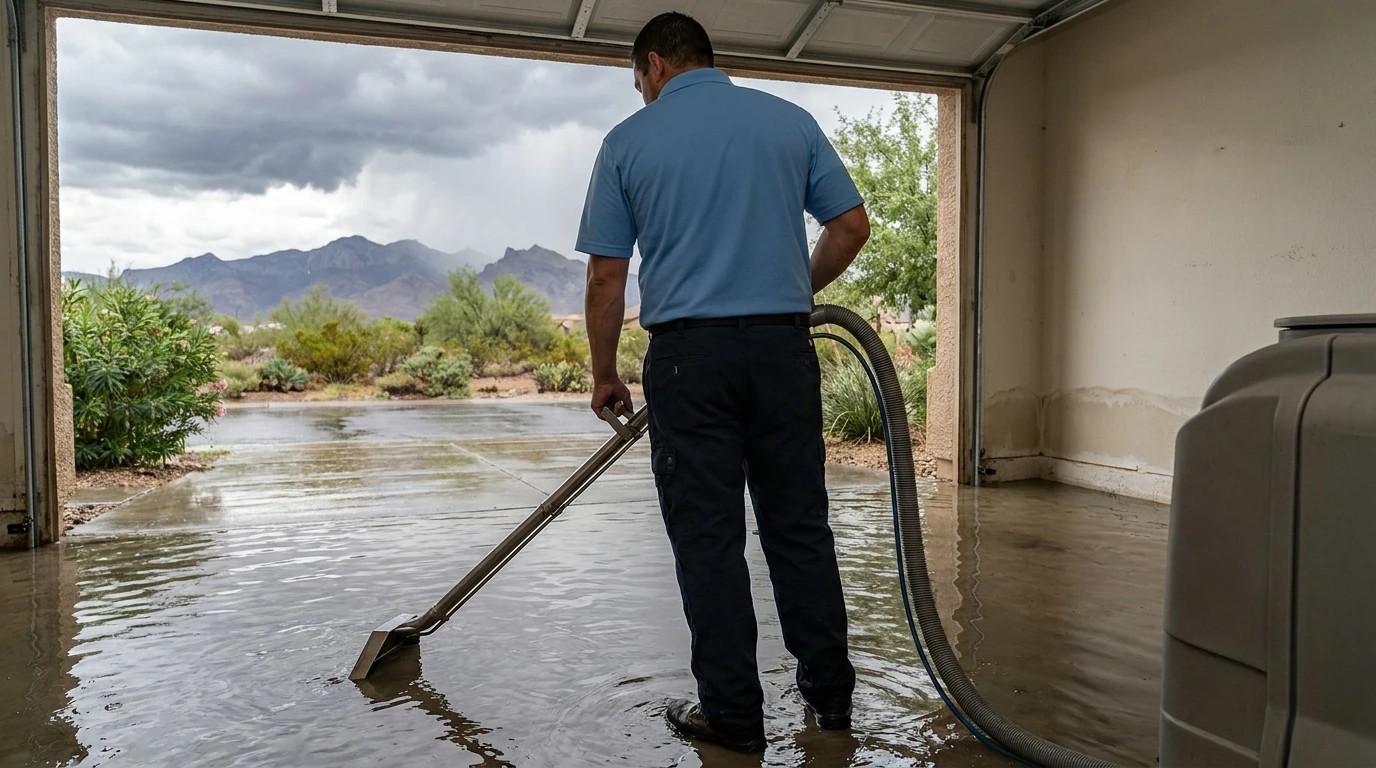
Once the area is safe, take photos and a short video of the water line, the affected rooms, and anything damaged, before you move or discard anything. This is the documentation your insurance adjuster will ask for first. Then move valuables and furniture legs out of standing water if you can do it safely. Don’t run a shop vac rated for dry debris into standing water, and don’t use a household wet/dry vac as your primary extraction tool for anything more than a few inches. It won’t pull water out of carpet pad or wall cavities, and the clock on mold growth starts within 24 to 48 hours either way.
Who Do You Call First: a Restoration Company, a Plumber, or the Utility?
Call a restoration company first for water that came from outside, a plumber for water still actively flowing from a pipe or fixture, and 911 or NV Energy for anything involving exposed wiring, a submerged panel, or gas smell. Flash flood water from street runoff or an overflowing wash isn’t a plumbing problem: there’s no leak to shut off, and a plumber doesn’t carry extraction equipment or dehumidifiers. That’s restoration work.
If the water is still rising or actively entering the home, your city’s non-emergency line or the Clark County Regional Flood Control District can tell you whether a wash or drainage channel nearby is still flowing. Once the inflow has stopped and it’s safe, the job becomes extraction, drying, and sanitizing, which is what a restoration crew does. Call your insurance company after mitigation starts, not before. Most carriers expect you to limit further damage immediately, and “I waited for the adjuster” is one of the more common reasons a claim gets reduced.
Is Flash Flood Water Dangerous to Clean Up Yourself?
Yes. Water that enters a home from outside ground-level flooding is classified as Category 3, or black water, under the ANSI/IICRC S500 standard, meaning it’s assumed to carry sewage, chemicals, pesticides, or other contaminants picked up from streets and storm drains. That’s different from a clean supply-line leak, and it changes the cleanup entirely.
Category 3 water means porous materials that got wet, carpet pad, baseboards, drywall up to the waterline, and often the lower few inches of insulation, generally need to be removed and discarded rather than just dried. Surfaces that stay need to be cleaned and sanitized, not just dried with a box fan. Drying alone leaves contamination behind and sets up conditions for mold within days, especially in a slab home where moisture has nowhere to go but up into the walls. If sewage backed up as part of the flooding, that’s its own category of work; see our sewage cleanup page for what that process involves.
Does Homeowners Insurance Cover Flash Flood Damage?
Usually not, if the water came from outside ground-level flooding. Standard homeowners policies typically exclude surface flooding and name it specifically as an exclusion, even though they do cover sudden, accidental water damage from inside the home, like a burst pipe. Flood coverage for rising water, storm surge, or overflow from a wash or drainage channel generally requires a separate policy through the National Flood Insurance Program or a private flood carrier.
That gap catches a lot of North Las Vegas homeowners off guard, especially those in slab homes near washes where water has entered from the exterior before. The Insurance Information Institute has a plain breakdown of what’s typically covered versus excluded. If you’re not sure which policy applies to your situation, documenting the source of the water (street runoff vs. a plumbing failure) matters more than anything else in that conversation, and it’s one of the first questions an adjuster will ask.
What Happens When You Call Desert Valley Restoration?
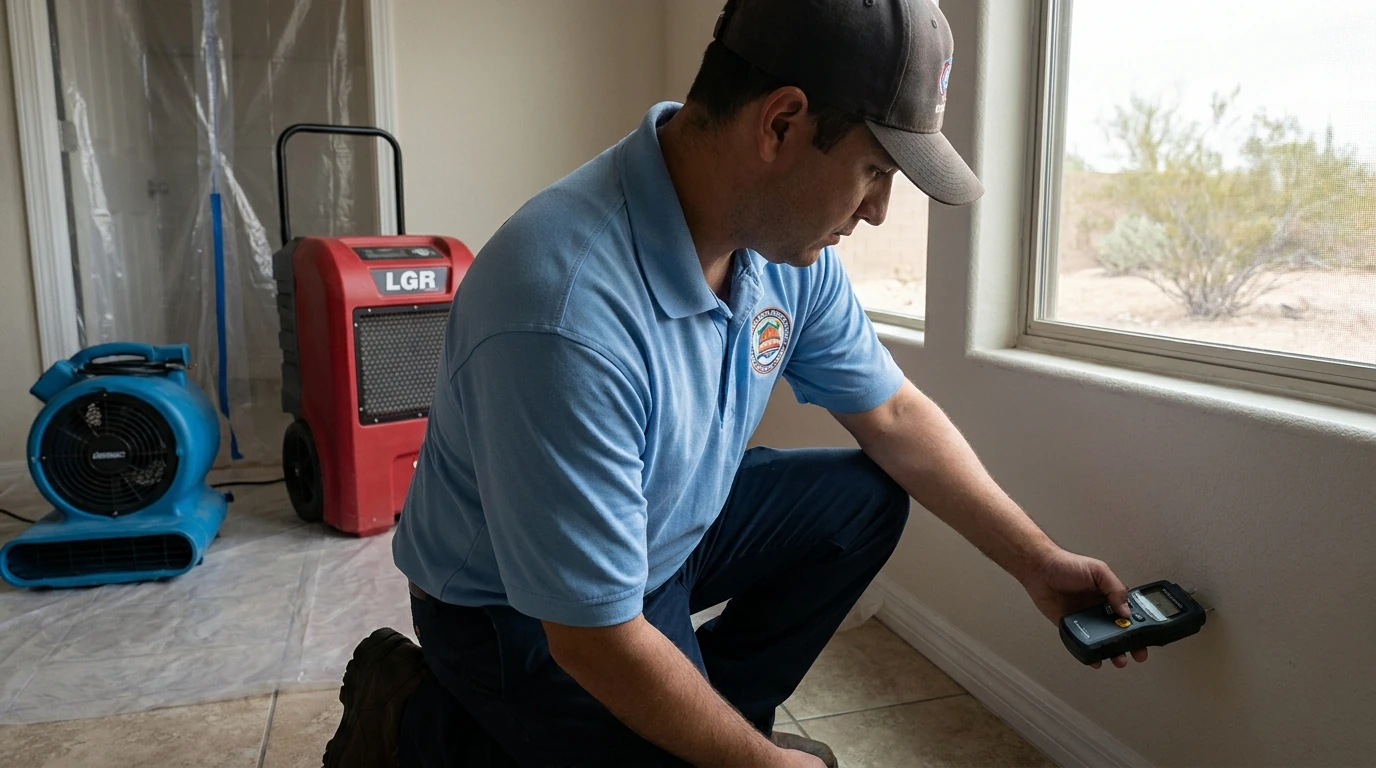
A technician walks you through immediate safety steps on the phone, then dispatches a crew to assess the source of the water, extract standing water, and set containment before drying equipment goes in. On arrival, the crew checks for Category 3 contamination, documents moisture readings room by room, and removes materials that can’t be safely dried and sanitized rather than left to dry in place.
From there, air movers and dehumidifiers run until moisture readings in the studs and subfloor return to normal, which the crew monitors daily rather than guessing based on a timeline. If the flooding pulled water into a garage slab or crawlspace common in North Las Vegas construction near Craig Ranch Regional Park and the Aliante drainage channels, that monitoring phase often runs longer than people expect, because concrete and block hold moisture longer than drywall. Throughout, the crew documents everything with photos and moisture logs for your insurance file. If you’re also dealing with wind or roof damage from the same storm, our storm damage restoration page covers that side of it, and our guide on what to do in the first 24 hours after water damage walks through the broader timeline.
If water is in your home right now, the fastest path is a call, not a search. Call Desert Valley Restoration at (702) 633-5033 to get a crew assessing the damage and starting extraction.
About Desert Valley Restoration
Desert Valley Restoration, operating as Desert Valley Restoration, has served North Las Vegas and the surrounding Las Vegas Valley since 2000. The company is an IICRC Certified Firm with technicians holding WRT, ASD, AMRT, and FSRT certifications, and is licensed in Nevada (License #0072652-B & B6). Their crews handle emergency water removal, water damage restoration, storm damage restoration, sewage cleanup, mold remediation, and fire and smoke restoration across the valley, available 24/7.