If a monsoon microburst peeled back part of your tile roof last night, or wind drove rain sideways through a cracked window during a summer storm, you need a number before the adjuster calls back. In North Las Vegas, storm damage restoration typically runs from $300 for a same-day emergency tarp to $40,000 or more for a full roof-to-drywall rebuild after a major wind breach. The real number depends on how much water got in, how long it sat, and whether the damage is contained to a ceiling or has spread into stucco, block walls, and a patio cover.
Storm jobs in this valley rarely look like a single clean water loss. A July microburst can tear a patio cover off its posts, crack roof tile, and push wind-driven rain through the gap in the same hour. Flash flooding off the washes can push water in at the slab before the roof damage is even patched. Pricing this work means pricing each stage separately, not quoting one headline number.
What Does Storm Damage Restoration Cost by Job Stage?
Most storm jobs move through four cost stages, and a homeowner rarely pays for all four. A wind-torn patio cover with no water intrusion might only need stage one and four. A roof breach that sat open through a weekend of monsoon rain can hit all four.
| Job Stage | Typical Cost Range | What’s Included |
|---|---|---|
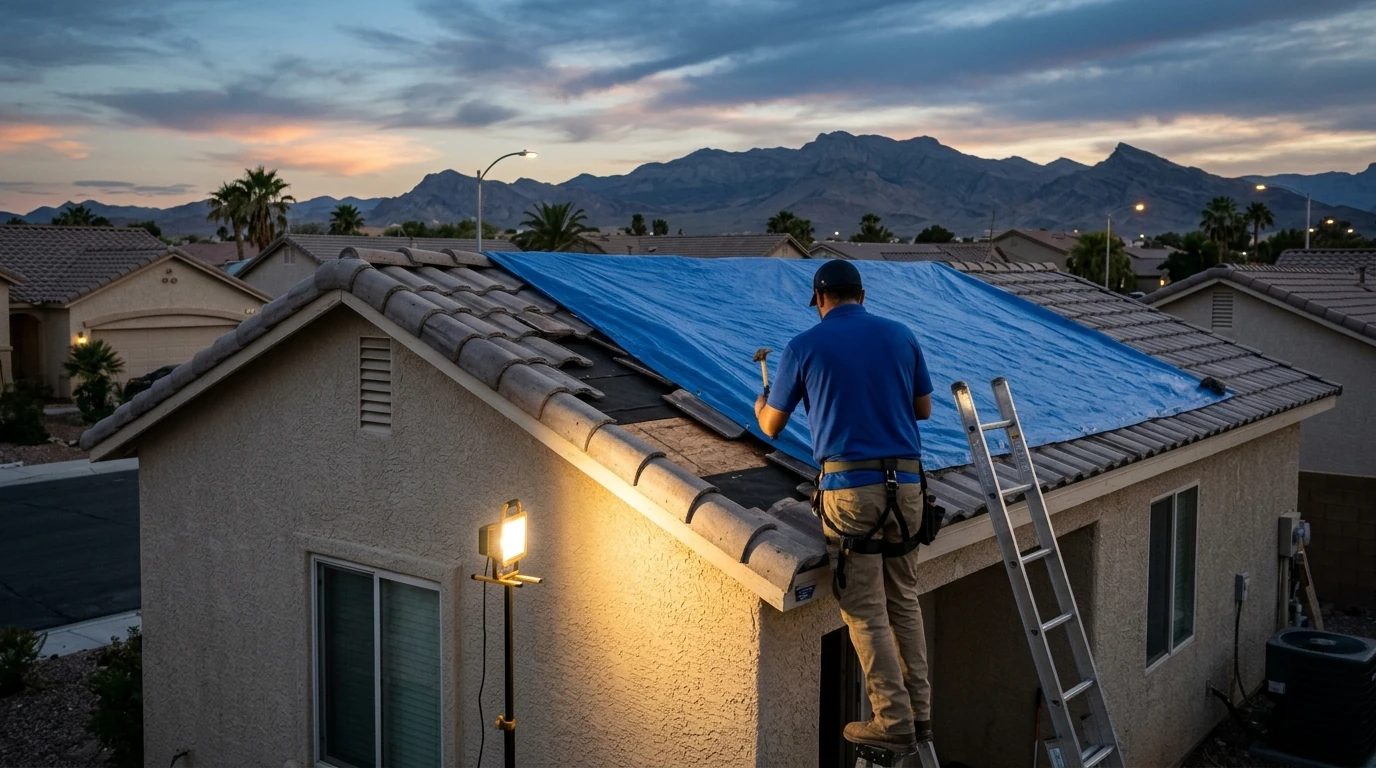
| Emergency tarp or board-up | $300 - $1,200 | Roof tarping, plywood over a broken window or door, securing the structure the same day |
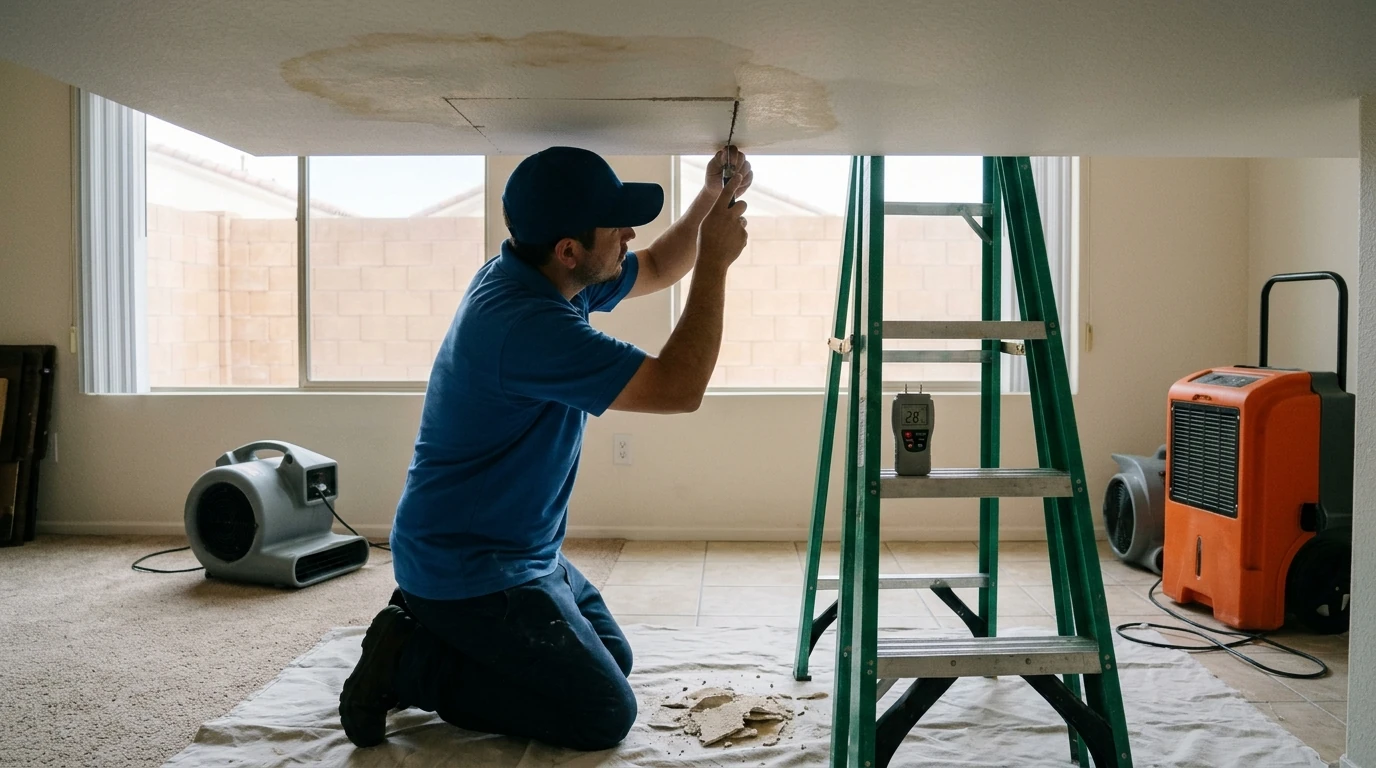
| Water extraction and drying | $1,500 - $4,500 per affected room | Extraction equipment, air movers, dehumidifiers, moisture monitoring to the IICRC S500 standard |
| Drywall and ceiling repair | $800 - $3,500 | Cutting out saturated drywall and insulation, texture match, paint |
| Stucco, block wall, or patio cover repair | $1,500 - $6,000 | Patching wind-torn stucco, repointing a cracked block wall, rebuilding a collapsed patio cover |
| Full reconstruction after a major breach | $10,000 - $40,000+ | Framing, roofing, drywall, flooring, and trim after a roof tear-off or structural wind damage |
These are typical industry ranges, not a quote. Every loss is different, and Desert Valley Restoration provides a written scope of work before anything starts so you know exactly what you’re paying for and why.
What Drives Storm Damage Cost Up or Down?
The single biggest cost driver is how contaminated the water is and how long it sat against building materials before a crew arrived. Four factors move the number from the low end to the high end.
Water category. Rain that seeps in through a simple roof leak or a gap around a window, without wind forcing it in, starts as Category 1 (clean) water under IICRC S500. Wind-driven monsoon rain is different: when it blows sideways through a cracked tile or a blown-out window during a storm, it’s treated as Category 3 water from the start, because it’s carrying roofing grit, dust, and outdoor contaminants as it comes in. Category 3 jobs usually mean cutting out wet drywall and insulation rather than drying it in place, plus antimicrobial treatment, which adds to both the time and the bill.
Response time. Drywall that sat wet for three days of a holiday weekend costs more to remediate than drywall pulled and dried within 24 hours, because mold can start growing on a wet surface within 24 to 48 hours per the EPA.
Square footage and structure type. A single cracked window in a bedroom is a fraction of the cost of a roof section torn off over a living room, especially in the stucco-and-block construction common across North Las Vegas subdivisions like Aliante and Eldorado, where repairing a block wall takes different materials and labor than drywall alone.
Code upgrades. If the permit requires bringing an older roof section up to current wind-load or flashing code during the repair, that’s an added line item, not an upcharge, it’s required by the jurisdiction.
Does Homeowners Insurance Cover Storm Damage in North Las Vegas?
Most standard homeowners policies cover sudden wind and storm damage, including wind-driven rain intrusion through a storm-damaged roof or a broken window. That’s different from flooding. Rising floodwater, whether from an overflowing wash or surface water pooling against the slab during a flash flood, is generally excluded from a standard homeowners policy and requires a separate flood policy through the National Flood Insurance Program or a private flood carrier.
That split matters in North Las Vegas because a single storm can produce both losses on the same property: wind tears the roof (homeowners coverage) while flash flooding off a nearby wash pushes water in at the slab (flood coverage). Document both separately with photos and a clear timeline. The Nevada Division of Insurance outlines the state’s claim process if you need to escalate a dispute with your carrier. For the mechanics of what a standard water damage claim covers, see our guide on whether homeowners insurance covers water damage. If your loss is a clean, pure water event with no wind or structural component, our NV water damage restoration cost guide has more specific ranges for that scenario.
What Happens During a Storm Damage Restoration Job?
- Emergency stabilization. A crew tarps the roof opening or boards up a broken window or door to stop additional water and debris intrusion, usually the same day the call comes in.
- Assessment and documentation. A technician photographs the damage, checks moisture levels with a meter, and identifies the water category before writing a scope.
- Extraction and drying. Standing water is pumped or extracted, then air movers and dehumidifiers run until materials hit a dry standard, dried to the IICRC S500 standard rather than guessed at.
- Demolition of unsalvageable material. Saturated drywall, insulation, or flooring that can’t be dried in place gets cut out and disposed of.
- Repair and reconstruction. Drywall, texture, paint, stucco, block, or framing gets rebuilt to match the original, or brought up to code where required.
When Does a Storm Repair Turn Into a Reconstruction Project?
A storm repair becomes a reconstruction project once the damage goes past drywall and paint into the structure itself, torn-off roof decking, a collapsed patio cover, cracked block walls, or exposed framing. At that point you’re not patching a ceiling, you’re rebuilding a section of the house, which means permits, framing crews, and a longer timeline. Desert Valley Restoration’s reconstruction team picks up exactly where mitigation and drying leave off, so the same company that dried the structure also frames and finishes it back to pre-loss condition.
If your storm damage is limited to a water-stained or sagging ceiling rather than structural wind damage, our ceiling water damage repair page covers that narrower scope and its typical cost range.
Getting a written scope before work starts is the single best way to keep a storm claim on track, both for your budget and for what the adjuster expects to see. Request a storm damage assessment and get that scope in writing before repairs begin.
About Desert Valley Restoration
Desert Valley Restoration is an IICRC Certified Firm based in North Las Vegas, NV (license 0072652-B & B6), operating since 2000. Their technicians hold IICRC credentials in water restoration (WRT), structural drying (ASD), fire and smoke (FSRT), and mold (AMRT), and the company is EPA Lead-Safe Certified. Desert Valley Restoration handles water damage restoration, storm damage restoration, reconstruction, fire and smoke damage, mold remediation, sewage cleanup, and related services across North Las Vegas, Las Vegas, Henderson, and the surrounding valley.
Need help now? Call Desert Valley Restoration at (702) 633-5033.
Video Transcript
A monsoon microburst just tore open your roof, and rain is pouring into your living room. You need real numbers, fast. In North Las Vegas, storm restoration costs range from three hundred dollars for an emergency tarp to forty thousand for a full rebuild. First comes emergency stabilization, tarping the roof or boarding broken windows the same day, usually costing between three hundred and twelve hundred dollars. Next, water extraction and drying removes standing water and dries out your home properly, running fifteen hundred to forty five hundred dollars per room. If drywall and ceilings got soaked, cutting out damaged material and repainting typically costs eight hundred to thirty five hundred dollars. Wind-torn stucco, cracked block walls, or a collapsed patio cover usually run fifteen hundred to six thousand dollars to repair properly. For a major roof breach needing full reconstruction, framing through flooring and trim, expect ten thousand to forty thousand dollars or more. Costs climb fast when wind-driven rain brings in contaminants, or when wet drywall sits for days, letting mold take hold. Homeowners insurance usually covers wind and storm damage, but flash flooding from a wash often needs a separate flood policy. Don’t guess what your repair will cost. Call Desert Valley Restoration at (702) 633-5033 for a free estimate.