TL;DR: Smoke damage cleanup in North Las Vegas typically costs $400 to $9,000. A single scorched room with light soot film runs $400 to $1,200, whole-house smoke penetration with HVAC contamination runs $4,000 to $9,000, and odor-only jobs from a neighbor’s fire or wildfire smoke drift usually fall between $600 and $2,500. The final number depends on how far the smoke traveled, how porous the affected materials are, and how long the residue sat before cleanup started.
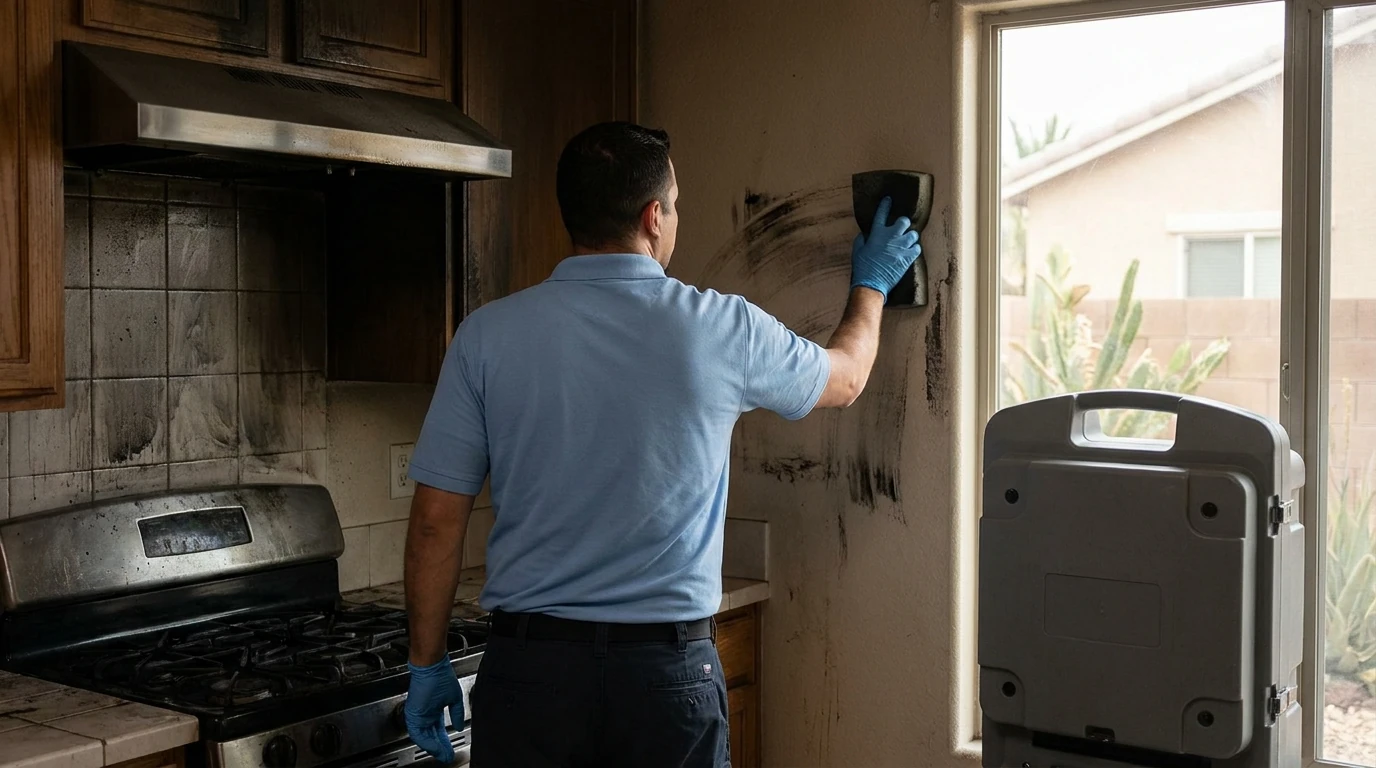
Maybe it was a grease fire that flared up on the stove and filled the kitchen with black film before you got it out. Maybe a fire two doors down sent smoke drifting through your HVAC system while you were at work. Either way, you’re standing in a house that smells wrong and looks worse, and you need a real number before you call anyone. This guide covers smoke and soot cleanup and odor removal only, not structural rebuild. If your fire burned through drywall, framing, or the roof, see our separate guide on fire damage reconstruction cost in North Las Vegas.
How much does smoke damage cleanup cost in North Las Vegas?
Most North Las Vegas smoke cleanup jobs fall between $400 and $9,000, with the spread driven almost entirely by how far the smoke traveled and what kind of smoke it was. A contained kitchen fire that stayed in one room costs a fraction of what whole-house smoke infiltration costs after it’s worked through drywall, carpet, and HVAC ductwork.
Protein smoke from a grease or kitchen fire is harder and more expensive to remove than dry smoke from a wood or paper fire, because protein residue is nearly invisible but leaves an intense, sticky odor that bonds to surfaces. Wildfire smoke drift, which North Las Vegas sees during Southern Nevada’s summer fire season, usually falls into the lighter, odor-focused tier since it rarely deposits heavy soot indoors.
| Scenario | Typical Cost Range |
|---|---|
| Small kitchen fire, single room, light soot film | $400 - $1,200 |
| Odor-only job (neighbor’s fire, wildfire smoke drift, no visible soot) | $600 - $2,500 |
| Moderate smoke, multiple rooms, HVAC contaminated | $1,500 - $4,000 |
| Contents cleaning and deodorization, per room | $300 - $900 |
| Whole-house thermal fogging + ozone or hydroxyl treatment | $1,000 - $3,000 |
| Heavy soot, whole-house smoke penetration | $4,000 - $9,000 |
Every loss is different. A written scope after an in-person assessment is the only way to get an accurate number for your specific situation.
What factors change the price of smoke cleanup?
The type of smoke, the number of affected rooms, and how long the residue sat before cleanup started are the three biggest cost drivers. Each one changes both the labor involved and the equipment needed.
Protein smoke (grease, cooking fires) requires degreasing agents and multiple cleaning passes on hard surfaces, which adds labor hours even when the visible damage looks minor. Dry smoke from wood or paper leaves a powdery residue that’s faster to wipe down but travels further through a house on air currents, often reaching rooms far from the fire’s origin.
HVAC contamination adds real cost. If the system ran during or after the fire, soot and odor particles get pulled into the ductwork and recirculate through every vent in the house. Cleaning or sealing ducts, replacing filters, and sometimes running duct-specific deodorization adds $500 to $1,500 depending on system size.
Time matters too. Soot is acidic, and the longer it sits on surfaces, especially metal fixtures, electronics, and unsealed wood, the more it etches and discolors them. A kitchen fire cleaned within 48 hours costs noticeably less than the same fire addressed a week later.
Does homeowners insurance pay for smoke cleanup?
Most standard homeowners policies cover smoke damage cleanup as part of fire-related perils, including smoke that originates from a neighboring property. Coverage typically includes professional cleaning, odor removal, and contents restoration, subject to your deductible.
The Insurance Information Institute notes that fire and smoke are among the perils covered by a standard HO-3 policy, which is the most common homeowners policy type. That said, coverage specifics (sub-limits on contents, whether smoke odor alone without visible damage qualifies) vary by carrier and policy language, so check your declarations page or call your agent before assuming a figure.
Documentation drives claim outcomes. Photos of affected rooms before cleanup starts, an itemized list of damaged contents, and a written scope of work from whoever does the cleaning all strengthen a claim. A restoration company that documents as it works, rather than after the fact, makes the adjuster’s job easier and your payout more likely to match the actual damage.
What should you throw away after smoke damage?
Porous items that absorbed smoke odor deep into their fibers, rather than just surface soot, usually can’t be fully deodorized and are better replaced than cleaned. That includes most soft, absorbent materials that sat close to the fire or in its direct smoke path.
Common items to discard:
- Upholstered furniture and mattresses with heavy smoke exposure
- Carpet padding (even if the carpet itself can be cleaned)
- Unopened food and anything stored without an airtight seal
- Cosmetics, medications, and other items affected by heat or smoke particles
- Plastic items that melted or warped, even slightly
Items worth attempting to save with professional cleaning: clothing and linens (often salvageable with ozone or specialty wet cleaning), hard-surface furniture, most electronics if cleaned promptly, and photos or documents, which specialty content cleaners can often restore even after heavy smoke exposure. A contents restoration and storage service can pack out, clean, and store salvageable belongings off-site while the rest of the cleanup happens.
What does the smoke and odor removal process actually involve?
Smoke cleanup follows a sequence: assessment and documentation, surface cleaning of hard materials, contents triage, and odor treatment using equipment matched to how deep the smoke penetrated. Skipping steps, especially odor treatment, is the most common reason a house still smells like smoke weeks later.
- Assessment. A technician walks the property, documents affected areas and contents, and identifies the smoke type (protein, dry, or wet smoke from a slow-burning fire).
- Source removal. Loose soot is HEPA-vacuumed before any wet cleaning, since wiping soot without vacuuming first tends to grind it deeper into surfaces.
- Surface cleaning. Walls, ceilings, hard flooring, and fixtures are cleaned with agents matched to the smoke type and surface material.
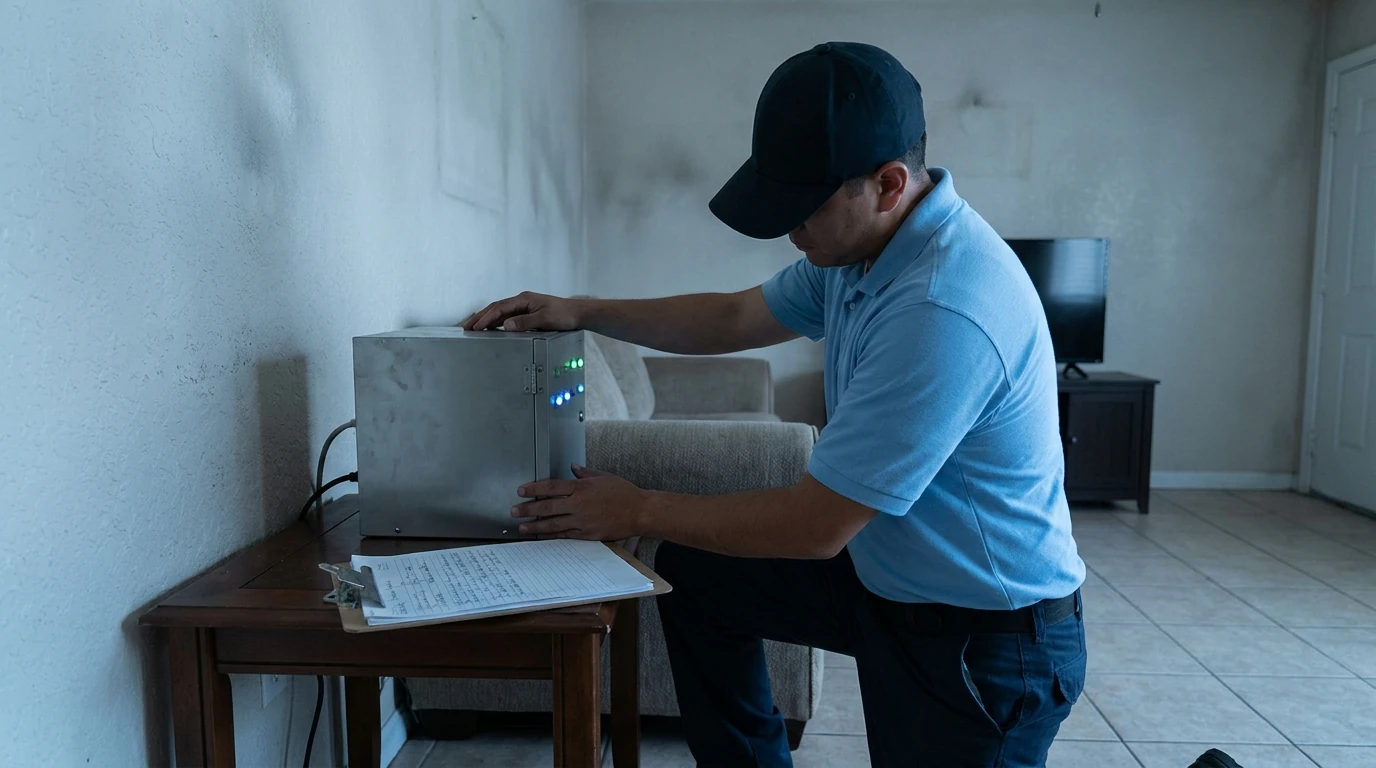
- Odor treatment. This is where thermal fogging, ozone generators, or hydroxyl generators come in. Thermal fogging uses a heated deodorizing agent that penetrates the same way smoke did. Ozone is effective but requires the space to be vacated during treatment. Hydroxyl generators work more slowly but can run in occupied spaces, which matters if displacement isn’t an option.
- HVAC and duct service, when the system was contaminated.
- Final verification that no odor remains, often with a walkthrough once the space has been aired out.
The IICRC’s S700 Standard for Professional Fire and Smoke Damage Restoration outlines the industry framework most of these steps follow.
Who should you call for smoke damage cleanup in North Las Vegas?
For smoke and soot cleanup without structural repair, call a restoration company with fire and smoke-specific IICRC certification rather than a general cleaning service, since soot removal and odor treatment require different chemistry and equipment than routine cleaning. Desert Valley Restoration, which operates locally as Desert Valley Restoration, handles smoke and odor removal jobs across North Las Vegas, Las Vegas, Henderson, and the surrounding valley, including the HVAC and contents work that often gets missed by general cleaners.
If the fire also damaged structural elements, drywall, framing, or the roof, you’ll need a fire damage restoration company that also handles reconstruction, not just cleanup. Our guide to the fire damage restoration process walks through how those two tracks, cleanup and rebuild, typically run in parallel.
Get a written scope before work starts either way. It protects you with your insurer and makes sure you’re paying for the tier of cleanup your home actually needs, not a blanket whole-house price for a problem that stayed in one room.
About Desert Valley Restoration
Desert Valley Restoration, doing business as Desert Valley Restoration, is an IICRC Certified Firm serving North Las Vegas, NV since 2000, licensed under Nevada Contractors Board license 0072652-B & B6. The company’s technicians hold IICRC FSRT (Fire & Smoke), WRT (Water), ASD (Structural Drying), and AMRT (Mold) certifications. Desert Valley Restoration handles smoke damage restoration, odor removal, fire damage restoration, water damage restoration, mold remediation, and related services across North Las Vegas, Las Vegas, Henderson, and the greater valley.
Need help now? Call Desert Valley Restoration at (702) 633-5033.