TL;DR: Emergency water removal (the extraction and drying phase only, not full repairs) typically costs $1,000 to $12,000 or more in North Las Vegas. The biggest swings come from the water category, how many square feet are affected, and how many days the equipment has to run. Clean-water jobs under 500 square feet land near the low end; sewage backups and multi-room gray-water losses push costs much higher. Homeowners insurance often covers this phase when the loss is sudden and accidental, and a licensed restoration company bills it using Xactimate line-item pricing that adjusters recognize.
If you’ve got water spreading across the floor right now, from a burst supply line under the sink, a failed water heater in the garage, or a washer hose that let go, you need two numbers fast: how much the extraction crew will cost, and whether insurance is going to pay it. This guide only covers the emergency removal and drying phase, pulling the standing water out, setting equipment, and getting the structure dry before mold has a chance to start. If you want the cost of the full job, including drywall, flooring, and repairs, see our separate water damage restoration cost guide for Nevada.
How Much Does Emergency Water Extraction Cost in North Las Vegas?
Most emergency water extraction and mitigation jobs in North Las Vegas cost between $1,000 and $12,000, with the majority falling in the $2,000 to $6,000 range for a single affected area. The final number depends almost entirely on how much water there is, what kind it is, and how many days the drying equipment has to stay running.
This is a different question than “how much does water damage restoration cost,” which includes rebuilding drywall, flooring, cabinets, and paint. Extraction and mitigation is the first, time-sensitive phase: getting water out and the structure dried to the ANSI/IICRC S500 standard before repairs even start.
Typical Costs by Scenario
| Scenario | Typical Extraction & Mitigation Cost |
|---|---|
| Clean-water loss (Category 1), under 500 sq ft, business hours | $1,000 - $2,500 |
| Clean-water loss, 500-1,500 sq ft, 3-4 drying days | $2,500 - $5,500 |
| Gray water (Category 2) from an appliance or sump backup | $3,500 - $7,500 |
| Black water (Category 3) from a sewage or drain backup | $5,500 - $12,000+ |
| After-hours or weekend emergency dispatch (add-on) | $150 - $500 |
| Carpet and pad removal and disposal, per affected room | $300 - $900 |
These are typical industry ranges, not a quote. A written scope follows a hands-on inspection, since every loss behaves differently once you open up a wall or pull back carpet.
What Factors Push the Price Up or Down?
Five variables move the price more than anything else: square footage, water category, timing of the call, materials affected, and how many drying days the job needs. Get a handle on these and the cost range above makes sense.
Square footage and depth. A single bathroom with an inch of standing water costs far less to extract than a great room where water has traveled under baseboards into an adjacent hallway. Extractors are typically billed per square foot of affected area.
Water category. Category 1 (clean water, like a supply line break) is the cheapest to mitigate because it doesn’t require antimicrobial treatment or removing as many porous materials. Category 2 (gray water, from a washing machine or a sump overflow) and Category 3 (black water, from sewage or a drain backup beyond the trap) cost more because contaminated materials, like carpet pad and baseboards, usually get removed rather than dried in place, and the crew needs PPE and antimicrobial application.
After-hours timing. A 2 a.m. call on a holiday weekend typically carries a dispatch premium over a mid-afternoon Tuesday call, because of the standing emergency crew needed to respond.
Carpet, pad, and drywall. Saturated carpet pad almost never gets dried and reused. Removing and disposing of it, along with flood-cut drywall if water wicked up the wall, adds a line item per room.
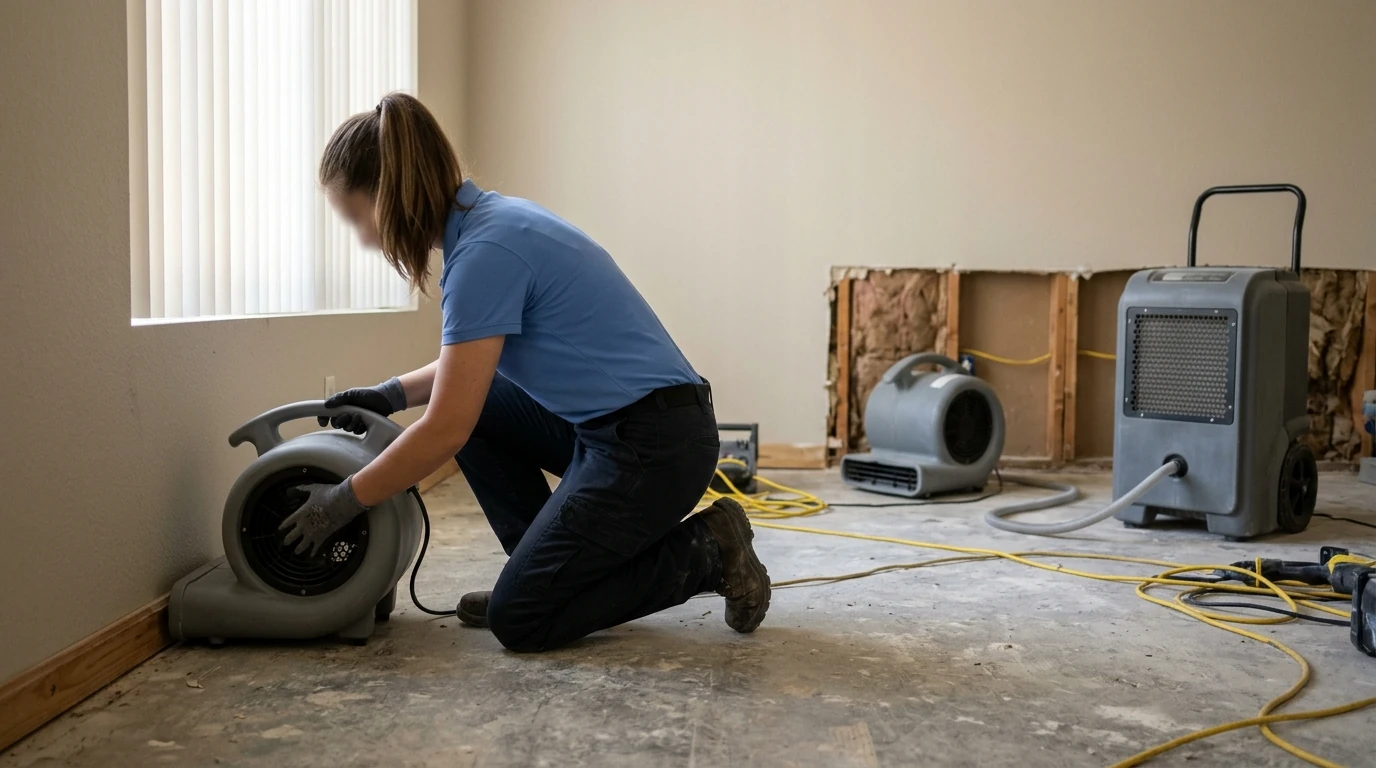
Number of drying days. Equipment (air movers, LGR dehumidifiers, sometimes injectidry systems for wall cavities) typically runs for 3 to 5 days, with daily monitoring visits to confirm materials have reached dry standard. More drying days means more equipment-day charges.
A North Las Vegas home near Aliante or Eldorado with a slab foundation and stucco exterior dries differently than an older block home closer to Craig Ranch Regional Park, so the technician’s moisture readings, not a generic formula, set the actual drying timeline.
Will Insurance Pay for Emergency Water Extraction?
Most standard homeowners policies cover emergency water extraction when the loss is sudden and accidental, like a burst pipe or a failed appliance hose, minus your deductible. What a policy usually will not cover without an endorsement is a sump pump failure or a sewer backup; those need a separate water backup (sewer/sump) rider.
Restoration companies typically document and bill mitigation work using Xactimate, the line-item pricing software most property insurers already use to evaluate claims. That shared pricing structure is part of why adjusters move faster on a mitigation invoice than on a vague handwritten estimate: the line items (equipment per day, labor hours, antimicrobial application, disposal) map directly to what the adjuster’s own software expects to see.
Gradual leaks, long-term seepage, and plain wear and tear are usually excluded no matter how the invoice is formatted; see the Nevada Division of Insurance for how state rules apply to claim disputes, and our plain-English guide to what homeowners insurance covers for water damage for the broader policy breakdown. You also have a duty to mitigate, meaning starting extraction promptly protects the claim itself, not just the structure.
What Happens During an Emergency Water Extraction Call?
A typical emergency extraction visit moves through five stages, usually completed within the first two to four hours on site.
- Triage and category assessment. The technician identifies the water source, categorizes the water (clean, gray, or black), and shuts off the source if it’s still active.
- Standing water extraction. Truck-mounted or portable extractors pull bulk water from floors, carpet, and pad.
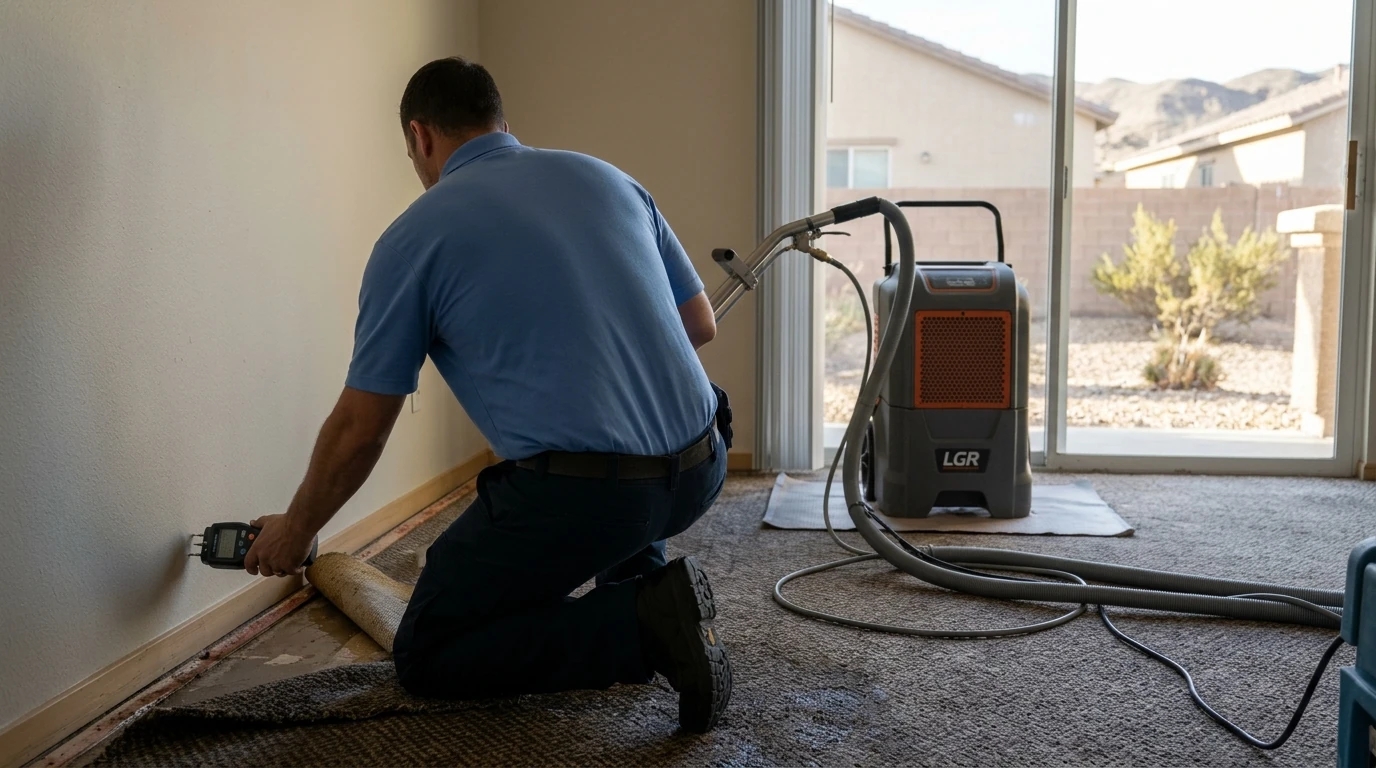
- Moisture mapping. A moisture meter checks walls, subfloor, and baseboards to map exactly how far the water traveled, often further than it looks.
- Equipment placement. Air movers and dehumidifiers get positioned based on the moisture map, not just the visibly wet area.
- Daily monitoring to dry standard. A technician returns daily to re-check moisture readings and adjust equipment until materials reach IICRC-recognized dry targets, typically 3 to 5 days.
After that, the mitigation phase is closed out with a dry-standard report, and any remaining repair work (drywall, flooring, paint) moves into a separate water damage restoration scope.
If water is actively spreading through your home right now, the priority is stopping the source and starting extraction within hours, not days, since mold can begin growing on wet materials within 24 to 48 hours. Call Desert Valley Restoration at (702) 633-5033 to get a crew and a written scope started.
About Desert Valley Restoration
Desert Valley Restoration is an IICRC Certified Firm (license 0072652-B & B6) serving North Las Vegas, Las Vegas, Henderson, and the surrounding valley since 2000. Their technicians hold IICRC Water Damage Restoration (WRT) and Applied Structural Drying (ASD) credentials and respond to emergency water extraction, water damage restoration, flood damage restoration, mold remediation, and fire and smoke restoration calls 24/7. This post was prepared with Rachelle Elliston and the Desert Valley Restoration team.